
Conference Room Logic vs. Island Reality: Why WAPA’s Regional Travel Hasn't Fixed the Grid
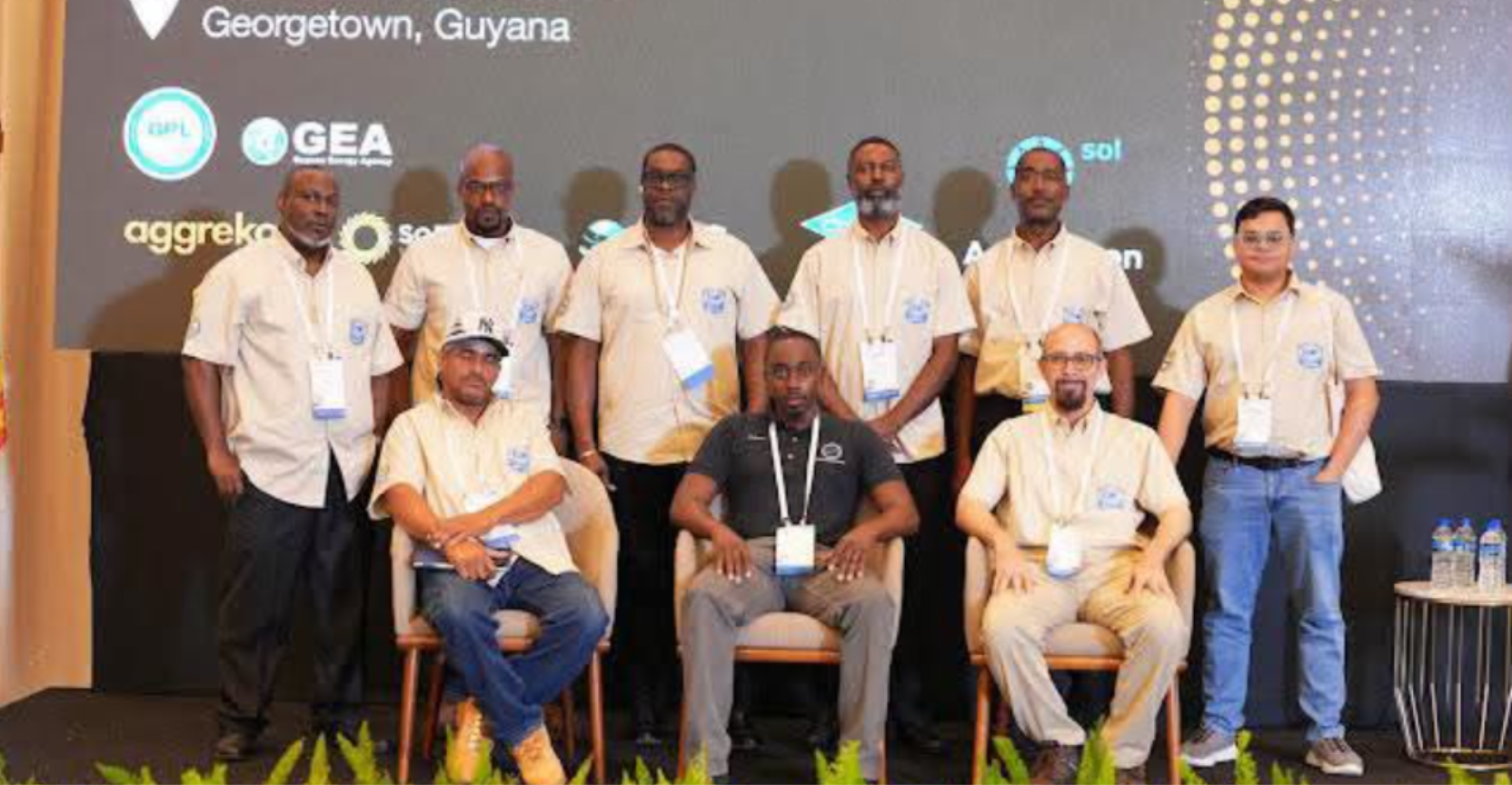
SITTING DOWN ON THE JOB: Delegates from WAPA pose on the main stage at the CARILEC Engineering & Procurement Conference in Georgetown, Guyana. While utility leadership networks in South America, residents back in the Virgin Islands continue to suffer through daily blackouts caused by an aging, unmaintained grid. (Photo: WAPA Facebook)
By JOHN McCARTHY / St. Croix Sun News Reporter
Just days after another series of unpredictable outages left residents across the territory resetting digital clocks and nursing fried home appliances, the Virgin Islands Water & Power Authority (WAPA) took to social media to share a landmark update.
Delegates from WAPA’s power plant, engineering, transmission & distribution (T&D), and procurement teams were pictured smiling on stage at the Marriott in Georgetown, Guyana, following their attendance at the recent CARILEC Engineering & Procurement Conference. The caption praised the value of “open forums,” “challenging ideas,” and “learning together.”
For a ratepayer sitting in the dark in Frederiksted or St. Thomas, the imagery is as jarring as it is predictable.
As explored yesterday in The St. Croix Sun News, the fundamental technical problem plaguing the USVI power grid is the "MacGyver approach"—a continuous cycle of splicing modern digital technology into an ancient, decaying 1970s analog infrastructure. The grid continually rejects these piecemeal upgrades, resulting in systemic failures.
Yet, as the physical infrastructure continues to struggle on life support, WAPA’s institutional response often centers on sending massive delegations to mainland and Caribbean summits. This raises a critical question for territory residents paying some of the highest power rates in the nation: Is technical networking translating into tangible grid stability, or is it merely corporate performance art on the ratepayer's dime?
THE UTILITY DISCONNECT
CARILEC / MAINLAND CONFERENCES
High-Level Talks
Modern Supply Chain Theory
Stage Photo-Ops & Travel
⬇️ The Implementation Gap
LOCAL GRID REALITY
1970s Analog Infrastructure
Cascading Circuit Trips
Unstable Daily Service
The Theory: Why Utility Conferences Matter
To be fair to utility operators, island energy grids are unique beasts. Unlike mainland utilities that can wheel power across state lines during peak demand or sudden generator trips, Caribbean utilities exist on isolated "energy islands."
Organized by the Caribbean Electric Utility Services Corporation (CARILEC), summits in places like Guyana bring together engineers facing identical geographic hurdles: extreme humidity, salt spray corrosion, hurricane vulnerability, and total reliance on imported fuel or isolated microgrids.
In theory, these conferences offer real value:
Bulk Procurement: Small island utilities lack individual leverage. Joint discussions allow regional players to negotiate better supply chain pipelines for critical components.
Technical Knowledge Sharing: Engineers learn how neighboring utilities navigate grid modernization and renewable integration without triggering blackouts.
The Reality: Sitting Down on the Job
Where the corporate logic falls apart for USVI residents is in the execution.
In the official photographs posted by WAPA, a delegation of nearly a dozen representatives poses on a polished main stage—some literally sitting comfortably in armchairs—framed by conference branding. While WAPA promotes these sessions as "asking questions and learning together," the heavy lifting required to fix the USVI grid isn't happening on a conference stage in South America.
Attending seminars on modern procurement strategies means very little when basic spare parts take months to reach St. Croix or St. Thomas during a generation crisis. Engaging in panel discussions about grid hardening offers zero comfort when a single rusty switch or tripped relay on an aging feeder line drops an entire district into darkness.
There is a widening gulf between WAPA’s administrative activity and its operational reality:
The Travel vs. ROI Metric: From trips to the Midwest to regional gatherings in South America, WAPA leadership frequently invests time and capital into external engagement. Yet, ratepayers are never presented with measurable outcomes—such as documented cost savings, accelerated parts delivery, or imported engineering fixes—resulting directly from these trips.
Abstract Theory vs. Hands-On Maintenance: You cannot solve a physical "organ rejection" problem on the ground with theoretical dialogue in an air-conditioned hotel ballroom. While executive teams discuss high-level energy transitions, the day-to-day operations remain bogged down by deferred maintenance and emergency fires.
Moving Beyond the Photo-Op
No one expects WAPA engineers to operate in total isolation from the rest of the energy world. Learning from peers across the Caribbean is inherently useful.
However, in a territory weary of constant blackouts and exorbitant utility bills, collaboration without conversion is useless.
If WAPA’s attendance at CARILEC or mainland industry sessions is truly aimed at building a stronger grid, the authority must begin showing its homework. Residents don't need Facebook photo dumps thanking delegates for "meaningful dialogue." They need stable power, reduced rates, and a complete end to the patchwork fixes that keep leaving the islands in the dark.
Until those conference takeaways translate into reliable electricity at the wall outlet, every group portrait abroad will continue to look less like progress—and more like an agency sitting down on the job.
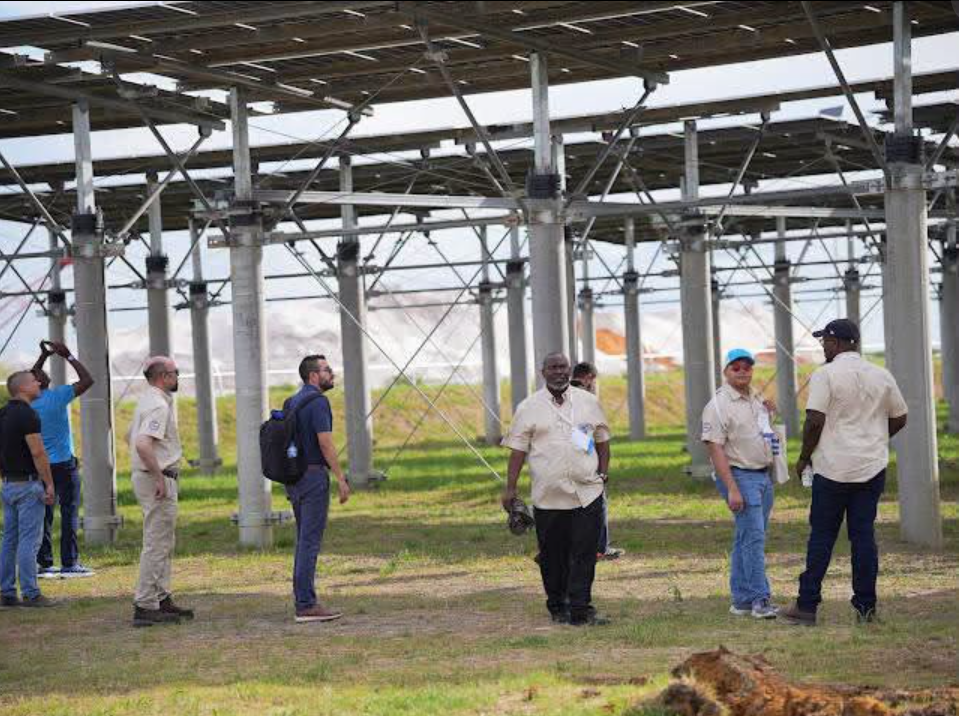
LOST IN SPACE: Clad in matching uniform shirts, WAPA delegates tour a modern solar array in Guyana—looking less like hands-on utility managers during an infrastructure crisis and more like tourists cosplaying modern energy leadership. While the delegation wanders through high-tech installations abroad, the territory’s 1970s analog grid back home remains grounded in the dark ages. (Photo: WAPA Facebook)
