
Why ‘MacGyvering’ the Electrical Grid Across the USVI Is Failing
By JOHN McCARTHY / St. Croix Sun News Reporter
For anyone who has ever survived a Sunday night in the Virgin Islands with a broken cistern pump, the routine is painfully familiar.
The pump dies, the hardware store is closed, and you need water now. So, you dig through the shed, pull out a mix of brass fittings, electrical tape, and a piece of hose, and you MacGyver a patch. It’s loud, it leaks a little, and it rattles the pipes behind the wall—but it buys you 12 hours until Home Depot opens on Monday morning.
The problem facing the territory today isn't that WAPA is patching things up in an emergency. It's that the emergency fix has become the permanent operating strategy.
For decades across St. Croix, St. Thomas, and St. John, the strategy for keeping the lights on has relied on piecemeal swaps: cutting out one failed 1970s component and splicing in a high-tech modern replacement. But as residents know all too well from the endless cycle of blackouts, this "MacGyver approach" isn't just failing to fix the grid—it’s actively making it more unstable.
                      THE PATCHWORK PARADOX
 ┌─────────────────┐       ┌─────────────────┐       ┌─────────────────┐
 │   1970s LEGACY  │  ──►  │ HIGH-TECH NEW   │  ──►  │ CASCADE FAILURE │
 │    EQUIPMENT    │       │    COMPONENT    │       │  System rejects │
 │ (Analog/Slow)   │       │ (Digital/Fast)  │       │  the upgrade    │
 └─────────────────┘       └─────────────────┘       └─────────────────┘
The Organ Transplant Problem: When the System Rejects the Upgrade
To understand why brand-new equipment keeps tripping off the grid, think of the electrical grid as a human body.
If a patient receives a heart or kidney transplant, the new organ might be an absolute masterpiece of modern medicine. But if you drop that new organ into a body without administering anti-rejection drugs, the body’s immune system sees the new part as a foreign invader and attacks it.
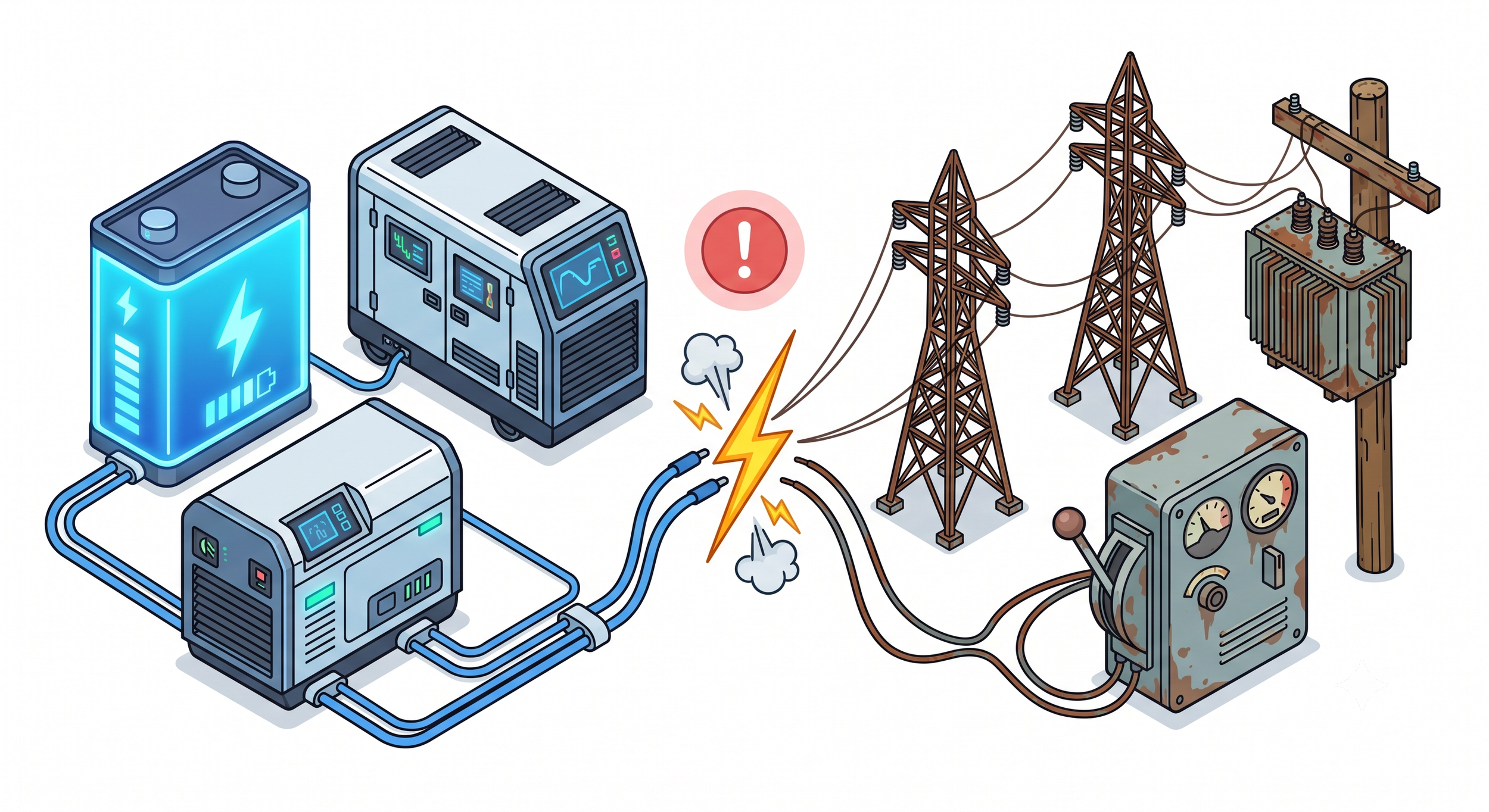
That is precisely what happens every time WAPA energizes a new 34kV feeder line, a digital generator, or a high-tech solar tie-in:
The Speed Mismatch: Modern computerized equipment reacts in microseconds to tiny variations in power. The 50-year-old analog switchgear it’s connected to moves at the speed of a rusty gate. When a tiny flicker occurs, the digital brain panics, assumes the old gear failed, and trips the circuit to protect itself.
The Surge Effect: Pushing clean, high-efficiency power into an ancient distribution line is like hooking a high-pressure modern water pump up to 1960s galvanized iron pipes. The new pressure simply travels down the line until it blows out the weakest, oldest joint downstream.
Rather than working together, the digital modern parts and the legacy analog parts essentially wage war against each other.
From ‘Sunday Night Patch’ to Structural Overhaul
A MacGyvered fix on a home cistern pump works because it only has to hold out until morning. But when an entire island grid operates on a patchwork blueprint, every new piece put in place creates a new point of friction.
The territory cannot "MacGyver" its way out of a structural utility crisis. Real stability only happens when the grid gets its "anti-rejection" buffers—like utility-scale Battery Energy Storage Systems (BESS)—and when federal funds are used to replace entire systems from end to end, rather than continually swapping out single organs in an aging body.
Until then, flipping the switch on a shiny new upgrade will keep yielding the same comical, frustrating result: a high-tech patch that breaks the old grid, leaving residents paying the highest rates in the nation to sit in the dark and wait for Monday morning.
