
⚖️ THE PRICE OF A PLEA: WHY A SLAYING CO-DEFENDANT WALKS FREE ⚖️
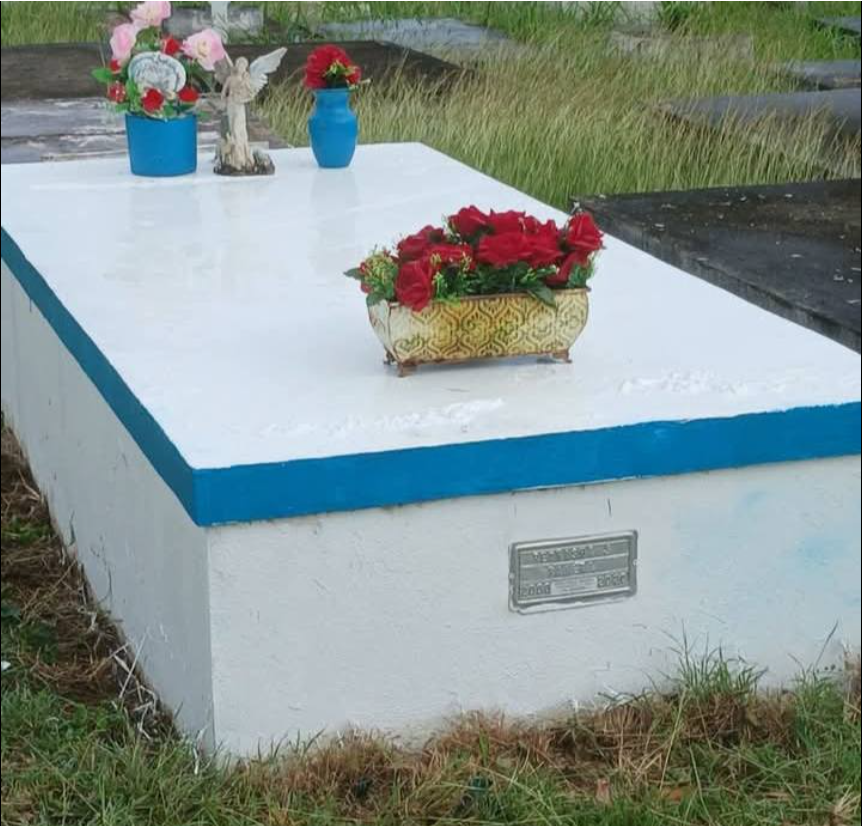
FINAL RESTING PLACE: The tomb of 20-year-old Reynisha Juanita Rivera at the Kingshill Cemetery on St. Croix. Rivera was tragically stalked and shot to death on the Melvin Evans Highway in September 2020. Public interest in her case has reignited following a "Direct-to-Dockets" investigation by the St. Croix Sun revealing that all criminal murder charges against co-defendant Estefani Rodriguez have been officially dismissed with prejudice due to a controversial territorial plea agreement. (Photo Courtesy: Facebook / Gabby Rivera)
By JOHN McCARTHY / St. Croix Sun Staff Writer
KINGSHILL — When 20-year-old Reynisha Juanita Rivera was chased down and shot to death on the Melvin Evans Highway in September 2020, the community demanded unyielding justice.
But court records just obtained by our investigative team reveal a quiet, devastating turn inside the Virgin Islands Department of Justice. All first-degree murder charges against co-defendant Estefani Rodriguez have been officially dismissed with prejudiceby Attorney General Gordon Rhea’s office. She is walking free.
Why? Because a controversial plea deal allowed her co-defendant to take sole responsibility to secure a sentence cap—creating a legal loophole that forever bars the territorial government from prosecuting her for this crime.
While other media outlets run simple summaries, our "Direct-to-Dockets" report blows the lid off the exact legal maneuvers, the prosecutor decisions, and the heartbreaking timeline that left a local family crying out for true institutional transparency.
THE PRICE OF A PLEA: How a Loophole in the Reynisha Rivera Murder Case Let a Co-Defendant Walk Free
Superior Court Filings Reveal Legal Strategy That Barred Territorial Prosecutors From Trying Estefani Rodriguez After Sole Responsibility Plea Deal
ST. CROIX — The tragic September 2020 highway slaying of 20-year-old Reynisha Juanita Rivera shook the territory to its core, revealing a chilling tale of stalking and roadside execution on the Melvin Evans Highway. Yet, nearly six years later, a deeper systemic wound has been laid bare in the Superior Court of the Virgin Islands, sparking public outrage from grieving family members demanding to know why justice was compartmentalized.
Public records obtained directly from the court dockets reveal that all criminal counts against Estefani Rodriguez—originally charged with first-degree murder alongside her boyfriend, Effrail Jones Jr.—were officially dismissed with prejudice on March 10, 2026.
The decision by Attorney General Gordon Rhea's office and prosecutor Kippy Roberson to drop the charges stems from a calculated, highly controversial plea arrangement that has legally bound the hands of the territorial government.
The Paper Trail of Dismissal
According to V.I. Superior Court records, the dismissal was a direct structural consequence of a plea agreement secured by co-defendant Effrail Jones Jr. To avoid a potential life sentence without parole, Jones agreed to take sole legal responsibility for the capital offense. In exchange, the defense secured a strict sentence cap.
However, the legal architecture of that deal included a catastrophic clause for the victim's family: by accepting Jones's allocution that he acted alone in pulling the trigger of the black Colt .45 handgun, the prosecution effectively severed its legal path to prove accomplice liability or conspiracy against Rodriguez. Because the charges were dismissed "with prejudice," the territorial government is now legally barred from ever re-filing charges against Rodriguez regarding this specific crime, leaving her to walk the streets completely free of legal jeopardy.
The Stalking Timeline vs. The Legal Loophole
The decision to offer such a lenient exit path stands in stark contrast to the initial probable cause fact sheets filed by the Virgin Islands Police Department (VIPD) in 2020.
The original investigative timeline showed an intricately coordinated effort:
The Tail: Video surveillance from the Gateway Service Station and local businesses showed a gray Nissan Juke—registered directly to Estefani Rodriguez—closely trailing Rivera’s Acura TSX at 2:55 p.m. on Sept. 13, 2020.
The Confratnation: Surveillance near the Roebuck Industrial Park captured Rodriguez's vehicle waiting alongside Rivera's car at the intersection for seven seconds.
The Shooting: The pursuit culminated in a volley of "four or five shots" fired directly through Rivera's front windshield, causing her vehicle to collide with a guardrail near a local highway church.
Despite initial police statements indicating that both individuals admitted to trailing Rivera to "scare her and call it a day," the VIDOJ's subsequent handling of the case allowed the strategic plea deal to completely erase Rodriguez's alleged role as the driver and facilitator of the trap.
A Family Left Fighting for Sunlight
For Rivera’s family, the legal maneuvers feel less like justice and more like an institutional betrayal. Family members, including Gabby Garcia, have publicly condemned the VIDOJ’s reliance on plea bargains when dealing with targeted acts of vehicular violence.
"This case was a win from the beginning," family members expressed in public statements, questioning why a trial on full accomplice liability was circumvented in favor of an early settlement. "No plea bargain should have been offered."
As community frustration mounts over the territory's perceived leniency in high-profile violent crime prosecutions, the Rivera case stands as a stark, documented reminder of how backroom legal technicalities can quietly close the docket on accountability.
