
PLEA DEAL OR COMPROMISE? How a Confessed St. Croix Highway Killer Escaped a Mandatory Life Sentence

FACE OF AN INVESTIGATION: Effrail Jones Jr. (left) and Estefani Rodriguez (right) following their arrest by the Virgin Islands Police Department in September 2020 at a residence in La Grande Princesse. Initially charged with first-degree murder in the highway shooting death of 20-year-old Reynisha Juanita Rivera, the joint conspiracy case completely dissolved following an eleventh-hour plea deal in 2026. (Credit: VIPD File Photo)
By JOHN McCARTHY / St. Croix Sun Investigative Reporter
ST. CROIX — For nearly six years, the family of Reynisha Juanita Rivera has waited for justice.
Rivera, 20, was tragically shot and killed on September 12, 2020, while driving her vehicle on the Melvin Evans Highway near the Industrial Park intersection. Within two weeks of the homicide, the Virgin Islands Police Department executed a high-profile arrest that promised absolute accountability for what authorities described as a cold-blooded, pre-planned execution.
Original reporting by the Virgin Islands Free Press in September 2020 detailed the swift crackdown by the VIPD’s Criminal Investigation Bureau. Investigators tracked down and arrested 23-year-old Effrail Jones Jr. and 21-year-old Estefani Rodriguez at a residence in La Grande Princesse. At the time of the arrest, police spokesmen confirmed that both suspects had been slapped with first-degree murder, first-degree assault, and multiple felony weapons charges. Initial police statements indicated the highway ambush was a calculated act of joint revenge following a prior dispute, and the community was led to believe both individuals would face the full weight of territorial law.
But earlier this year, just weeks before that long-delayed jury trial was finally scheduled to commence, the territorial justice system quietly executed an eleventh-hour maneuver. Through a swift exchange of court motions, a quiet compromise completely altered the trajectory of the capital case, leaving a grieving family blindsided and a co-defendant walking away scot-free.
Territorial court dockets obtained directly by The St. Croix Sun reveal the hidden mechanics of a judicial compromise that downgraded a mandatory life sentence to a maximum twenty-year cap.

ACCEPTED COMPROMISE: Effrail Jones Jr. signed an application to enter a plea of guilty to a downgraded charge of Second-Degree Murder, dodging a mandatory life sentence without parole. Court dockets reveal the Virgin Islands Department of Justice agreed to recommend a maximum cap of 20 years imprisonment for his role as the sole gunman in the 2020 Melvin Evans Highway ambush. (Credit: VIPD File Photo)
The Midnight Deal
According to public dockets in the case of People of the Virgin Islands v. Effrail Jones, Jr. (Case No. SX-2020-CR-00267), the matter was barreling toward jury selection scheduled for February 2, 2026.
However, signed court documents show that on December 23, 2025, defense counsel Nicholas J. Babilis, Esq., of the Office of the Territorial Public Defender, and Assistant Attorney General Kippy G. Roberson reached an agreement. The formal Application for Permission to Enter Plea of Guilty was officially filed into the C-Track system on January 5, 2026.
Under the terms of the signed plea agreement, the Virgin Islands Department of Justice agreed to drop two counts of First-Degree Murder—charges that carry a mandatory sentence of life imprisonment without the possibility of parole under section 922(a) of Title 14 of the Virgin Islands Code.
In exchange, Jones pled guilty to a single downgraded charge: Murder in the Second Degree (14 V.I.C. § 922(b)).
The most controversial stipulation sits under Item 3 of the plea agreement. Rather than leaving the final penalty entirely to judicial discretion, the document reveals that the prosecution explicitly agreed to "recommend a cap of twenty years imprisonment." With time served since his 2020 arrest accounted for, the compromise means a confessed highway gunman could potentially be back on St. Croix streets in roughly a decade.
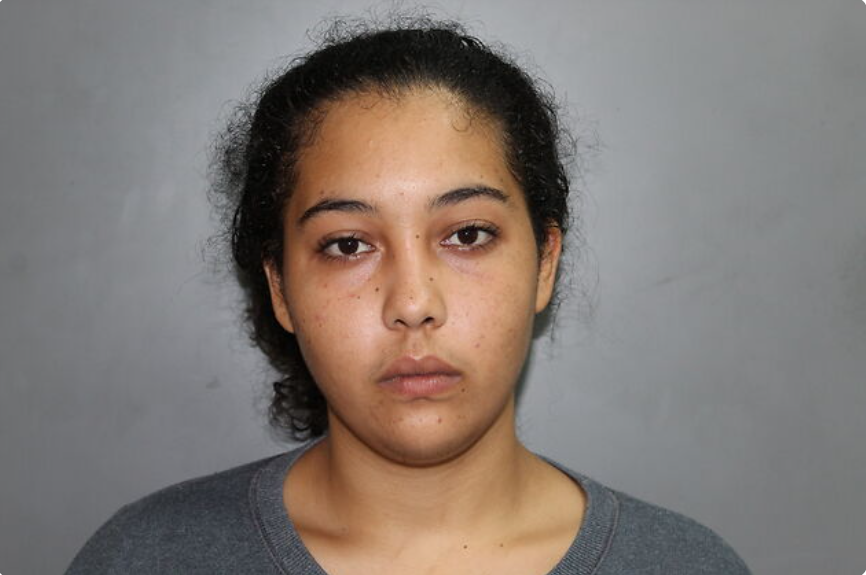
CHARGES DISMISSED: All criminal counts against Estefani Rodriguez were officially dismissed with prejudice in the Superior Court of the Virgin Islands. Because her original co-defendant took sole legal responsibility for the capital offense to secure a sentence cap, the territorial government is now legally barred from ever prosecuting Rodriguez for the homicide again. (Credit: VIPD File Photo)
The Collapse of Conspiracy
The systemic domino effect of Jones’s plea agreement immediately transformed the case against his original co-defendant, Estefani Rodriguez—the second half of the La Grande Princesse pair whose arrest gripped the island in 2020.
Because Jones signed an oath certifying full, sole responsibility for the shooting to secure his mid-sentence cap, the prosecution's joint conspiracy charges evaporated. Consequently, Superior Court records indicate that all criminal charges against Rodriguez were dismissed with prejudice—meaning the territory is legally barred from ever prosecuting her for Rivera's murder again.
The sudden dismissal has sparked intense public outrage from the Rivera family online, who have openly questioned the transparency of the Attorney General’s office, stating that the deal feels akin to treating a human life with total disregard.
Clerical Cross-Contamination
The paperwork underlying the final months of the case also highlights ongoing precision issues within the administrative branches of the local judiciary.
An official Record of Proceedings from a pre-trial conference, signed by the court clerk, mistakenly logged Attorney Babilis as appearing on behalf of "Defendant Estefani Rodriguez" within Effrail Jones Jr.’s primary case file. While a minor administrative typo on its face, the cross-contamination of defense counsel records in a capital murder file underscores a broader lack of institutional meticulousness that frequently goes unnoticed without direct docket oversight.
As the territory continues to grapple with a backlog of violent crime dockets stretching back to the pandemic era, the resolution of Rivera's homicide raises an uncomfortable question for St. Croix residents: Is the Department of Justice securing true accountability, or are they simply clearing the court calendar at the expense of victims' families?
🏛️ SIDEBAR: The Cost of the Hand-Off and the Exclusion of the Family
While the formal text of a plea agreement looks like a routine bureaucratic resolution, the human reality behind Case No. SX-2020-CR-00267 reveals a profound institutional breakdown in communication and continuity.
Following the publication of The St. Croix Sun’s docket analysis, Priscilla Rivera, a relative of homicide victim Reynisha Juanita Rivera, spoke out publicly regarding the total lack of transparency surrounding the Department of Justice’s sudden compromise.
According to the family, the decision to drop first-degree murder charges and accept a 20-year sentence cap for Effrail Jones Jr. was executed entirely behind closed doors under Attorney General Gordon C. Rhea’s administration.
“Whatever plea bargain was agreed on was not discussed, much less agreed to, by Reynisha Rivera’s family,” Priscilla Rivera stated, noting that the territorial government completed the agreements without ever consulting the grieving family. “Accountability is not about money alone. It is respect, truth, honesty, and justice for all.”
The Prosecutor Transition
The dockets themselves back up a critical structural shift that may have ultimately dictated this lenient outcome: a late-stage transition between prosecuting attorneys.
Official records from July 2025 show that Amie Simpson, Esq. was originally handling the intense pretrial conferences and preparing the government's case to face a jury in February 2026. However, before the year concluded, Simpson departed the office, and Assistant Attorney General Kippy G. Roberson, Esq. inherited the capital file.
In criminal justice systems nationwide, the "hand-off" of a complex, years-old homicide file from a departing prosecutor to an incoming one right before trial frequently triggers a settlement. Facing an inherited, cold folder and the immense pressure of clearing a backlogged calendar, an incoming prosecutor often seeks a guaranteed plea rather than risking a trial on short preparation.
The Final Stand
While the paperwork has been signed by both the prosecution and defense counsel Nicholas J. Babilis, the legal saga is not entirely over.
As Priscilla Rivera pointed out, the court has not yet conducted the official sentencing hearing. This upcoming date before Superior Court Judge Yvette Ross-Edwards represents the family's final stand. Under Virgin Islands law, the formal sentencing is the moment where the Rivera family retains the right to deliver their oral Victim Impact Statements.
It remains to be seen whether Judge Ross-Edwards will simply rubber-stamp the DOJ’s controversial 20-year compromise, or if the raw testimony of a blindsided family will force the court to reconsider the true price of justice on St. Croix.
