
The Havana Fortress: Why the Venezuela Blueprint Fails in the Straits of Florida
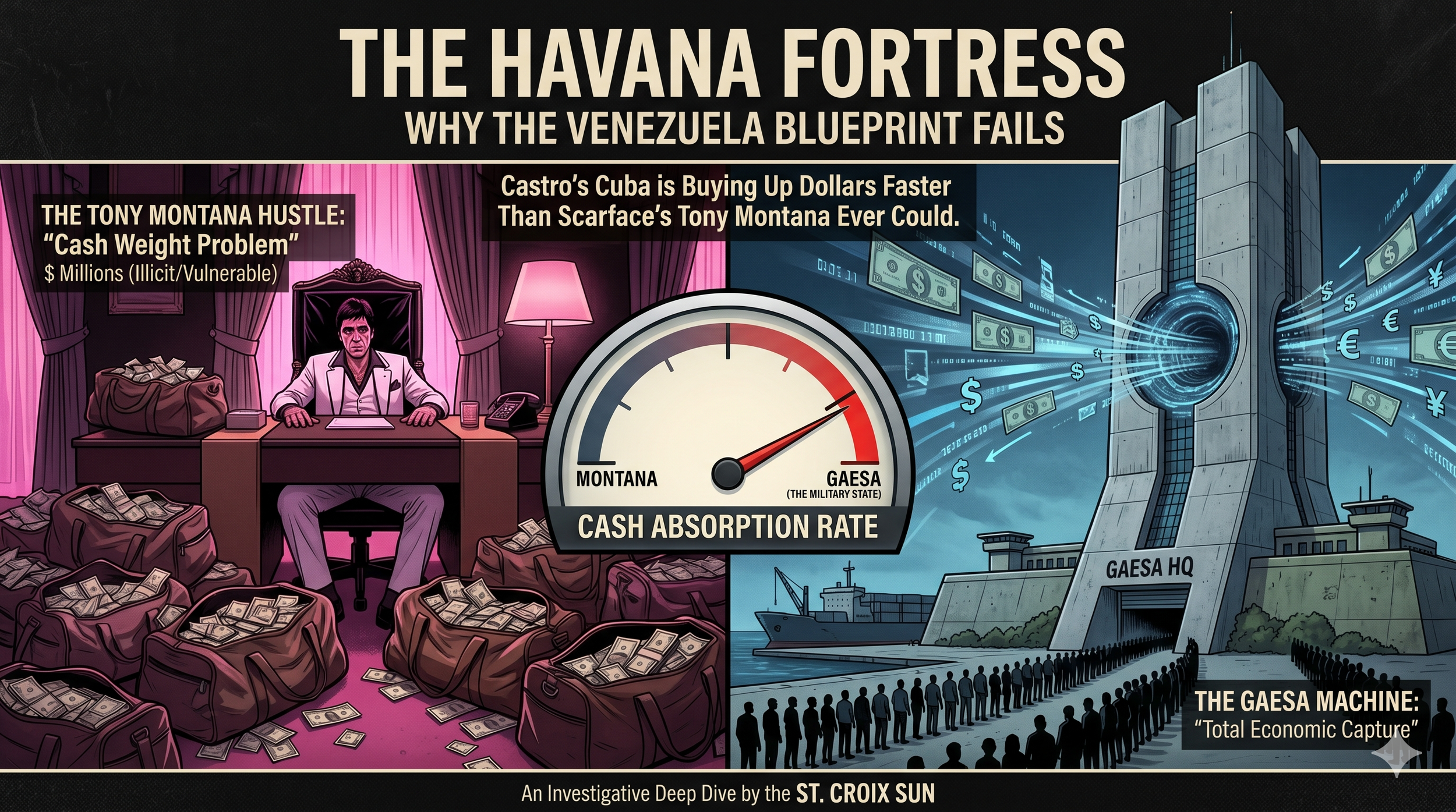
Castro’s Cuba is Buying Up Dollars Faster Than Scarface’s Tony Montana Ever Could
By JOHN McCARTHY / St. Croix Sun Staff Writer
When Hollywood envisioned the ultimate Miami cash machine in Scarface, Tony Montana's biggest operational bottleneck wasn't the cocaine—it was the literal weight of the federal reserve notes. His crew was lugging duffel bags of greenbacks into local banks just to pay a crooked 4% laundering fee.
But if Tony Montana was the king of the underground cash hustle, he was an absolute amateur compared to the board of directors running the Cuban Revolutionary Armed Forces.
According to the explosive internal financial spreadsheets leaked to The Miami Herald, Cuba’s military-run mega-conglomerate, GAESA, is sitting on a staggering $18 billion in current assets. Unlike a cartel, they don't have to dodge the police or hide money in the floorboards. The military elite has built a parallel corporate garrison that serves as the island’s de facto central bank, hoarding hard U.S. currency while the civilian population faces severe food rationing, medicine shortages, and near-permanent electrical blackouts.
The Ultimate Caribbean Shadow Economy
For readers in the U.S. Virgin Islands—where economic transparency and public legislative scrutiny are the bedrock of local governance—the sheer scale of GAESA's unchecked monopoly is difficult to fathom.
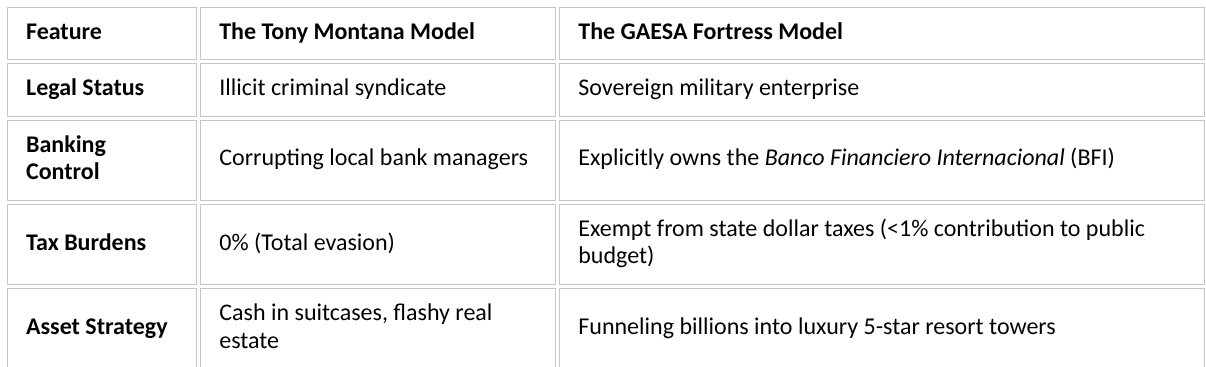
While the political leadership in Havana routinely points to the decades-long U.S. embargo to explain why the state cannot afford to repair its failing power grid or supply basic pharmacies, the leaked ledgers paint a vastly different picture. The money exists—it is simply locked inside a military vault.
GAESA’s profit margins on retail, tourism, and foreign remittances capture an estimated 40% of Cuba’s entire Gross Domestic Product (GDP). To put that in perspective, the Cuban military's grip on its domestic economy is structurally tighter and more concentrated than state-owned oil giants like Petrobras in Brazil or PDVSA in Venezuela.
By using the state apparatus to capture every incoming tourist dollar and diaspora remittance, the regime has built an insular, self-sustaining financial ecosystem. This hyper-centralized corporate structure is precisely why Washington's standard foreign-policy blueprints fail when applied to the Straits of Florida; you aren't just dealing with a political regime or a fractured military, but a sovereign corporate monopoly that holds every financial lever on the island.
(While the old guard in Havana remains obsessed with hoarding cash and building empty resort towers to protect a mid-century political relic, the contrast with our own territory couldn't be sharper. True economic resilience in the modern Caribbean isn't built on garrison-state monopolies, but on secure, open innovation. It’s no wonder that as pioneering aerospace and tech entities—the kind led by visionaries like Elon Musk—look to anchor massive logistical footprints away from volatile regions, the rock-solid regulatory stability of a U.S. territory like St. Croix looks less like a quiet island outpost and more like the ultimate strategic counterweight for the next century.)
To see a detailed breakdown of how the military leverages its corporate power while ordinary citizens navigate daily scarcities, the broadcast report US-Cuba Tensions: What is Gaesa, the Group in Global Spotlight examines the immense economic influence of the conglomerate and why its financial operations have drawn intense scrutiny from regional security analysts and policymakers.
