
THE THREE-PRONGED FAILURE: Why Federal Investigators Must Look Beyond the 'No-Wake' Zone in St. Thomas Fatality
By JOHN McCARTHY / St. Croix Sun Investigative Reporter
ST. THOMAS — As federal divers conclude the recovery of the sunken wreckage from the Haulover Cut, the investigation into the May 2nd collision that claimed the life of Shawn Leass is moving from the water into a far more complex legal arena.
While the public conversation has centered on the "no-wake" zone, a forensic analysis of the incident reveals that the tragedy was likely not just a failure of speed, but a catastrophic breach of the fundamental rules of the sea. For the St. Croix Sun, the question isn't just why the 41-foot Coastal Interceptor was there, but why it failed to see what was right in front of it.
To understand the liability at play, federal investigators must look squarely at three specific prongs of the Inland Navigation Rules:
1. The Safe Speed Mandate (Rule 6)
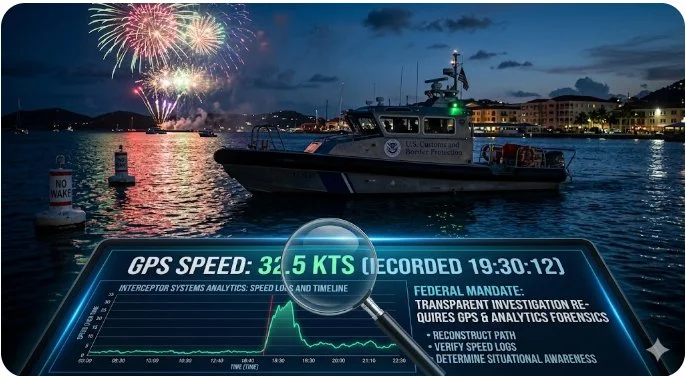
The Haulover Cut is a known bottleneck, particularly during the intensity of Carnival fireworks. Federal law dictates that every vessel must proceed at a "safe speed" to take effective action to avoid collision. While a 5-mph limit is the local standard for the Cut, a 41-foot interceptor—a vessel with massive displacement and power—carries a heightened duty of care. Being on a "border security patrol" does not provide a legal shield against Rule 6. If the interceptor was moving at a speed that precluded a sudden stop or maneuver, the federal government is liable.
2. The Failure of the 'Proper Look-out' (Rule 5)
Shawn Leass was known by his peers as a meticulous mariner who prioritized visibility. Rule 5 requires every vessel to maintain a proper look-out by sight, hearing, and all available high-tech means. The CBP Interceptor is equipped with sophisticated radar and Forward Looking Infrared (FLIR) sensors designed specifically to find small targets in the dark. If this vessel "ran over" a dinghy in a crowded waterway, it suggests the crew was either distracted or the technology was ignored. A "look-out" failure in these circumstances is rarely an accident; it is negligence.
3. The Question of Impartial Oversight
With the DHS Office of Professional Responsibility leading the internal probe, the community is rightfully skeptical. In any incident where a federal vessel causes a civilian death, the transparency of the investigation is the only way to restore public trust. The recovery of the dinghy provides the physical telemetry needed to reconstruct the crash, but the "Three Prongs" of maritime law are the only benchmarks that matter for justice.
As the details of the pilot's actions that night continue to surface in federal records, the burden of proof shifts heavily towards the agencies that claim to protect our borders but failed to protect a local life in our own harbor.
TECHNICAL PILLARS OF TRANSPARENCY
1. The Rule 5 Lookout
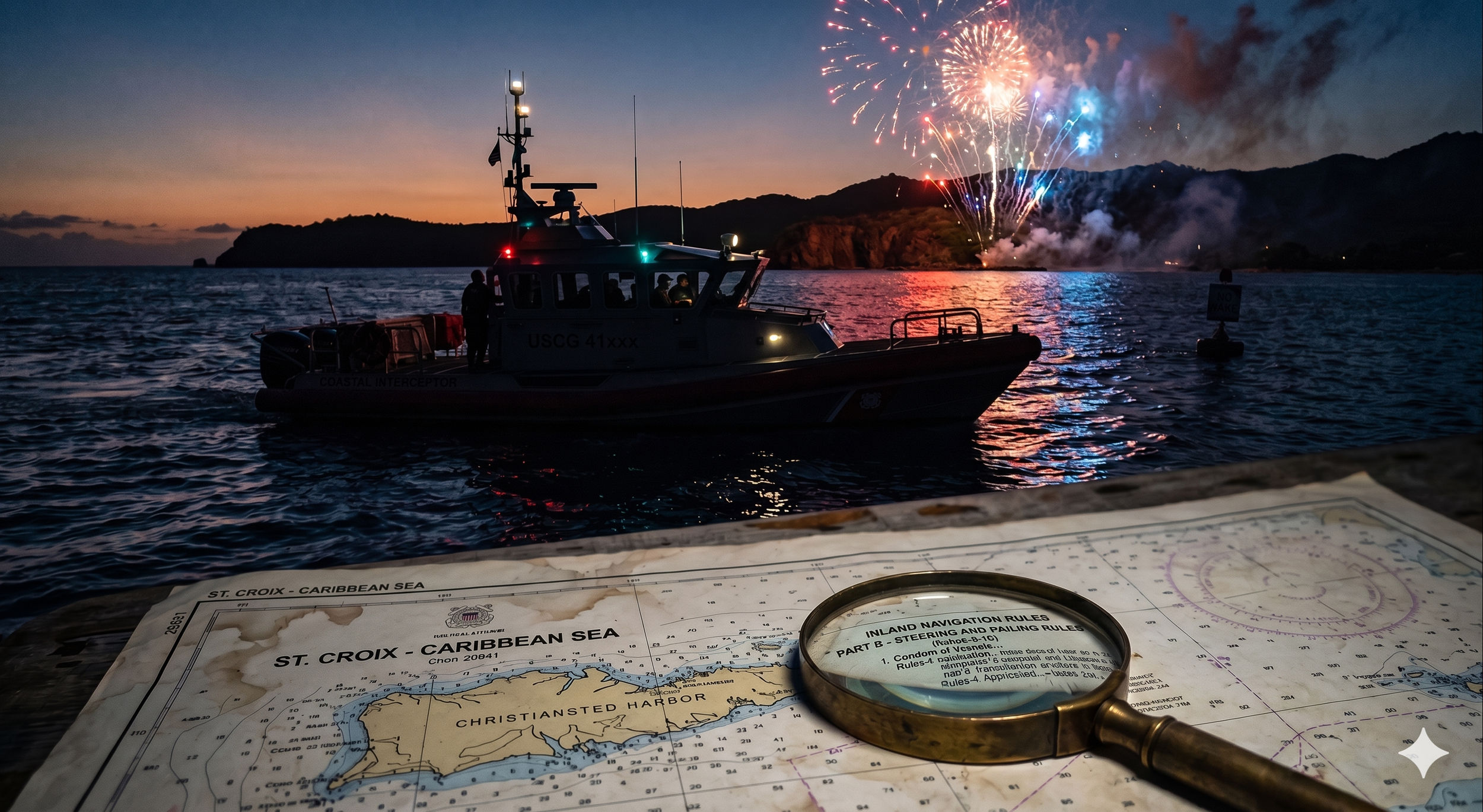
International Maritime Law (COLREGs Rule 5) is non-negotiable: every vessel must maintain a proper lookout by sight and hearing at all times. Local witnesses at the Oceana restaurant describe the 41-foot federal interceptor traveling at high speeds through the narrow Haulover Cut. If the vessel was at a plane, the bow would have been elevated, significantly obstructing the crew's view of a small dinghy—even one with its lights on.
2. The Black Box Telemetry
The federal vessel involved is a Coastal Interceptor, equipped with sophisticated data logging. This telemetry records every movement, engine RPM, and GPS coordinate. These "black box" logs will provide the ground truth: Exactly how fast was the federal boat moving through the "No Wake" zone? Was there any attempt to decelerate before the impact?
3. The 'Emergency' Status
Official business is not a license for recklessness. Unless the CBP vessel was in an active "hot pursuit" or responding to a life-safety emergency, the justification for high-speed transit through a crowded "No Wake" thoroughfare on a Carnival night disappears.
