
INVESTIGATIVE ANALYSIS: USVI Tourists Benefit from the Territory’s Unique Water Safety Transparency Standards
By JOHN McCARTHY / St. Croix Sun News Reporter
ST. CROIX — Every Friday, residents of the U.S. Virgin Islands have grown accustomed to a routine piece of government data — the DPNR weekly beach advisory. It tells swimmers which bays are clean and which ones are choked with bacteria or stormwater runoff. It is a vital report that anyone who takes a regular “sea bath” appreciates greatly.
Last week’s administrative breakdown forced us to take a step back, and examine a much larger, wider macro question: Why does the USVI do this at all, and how does our environmental transparency stack up against the rest of the multi-billion-dollar Caribbean tourism market?
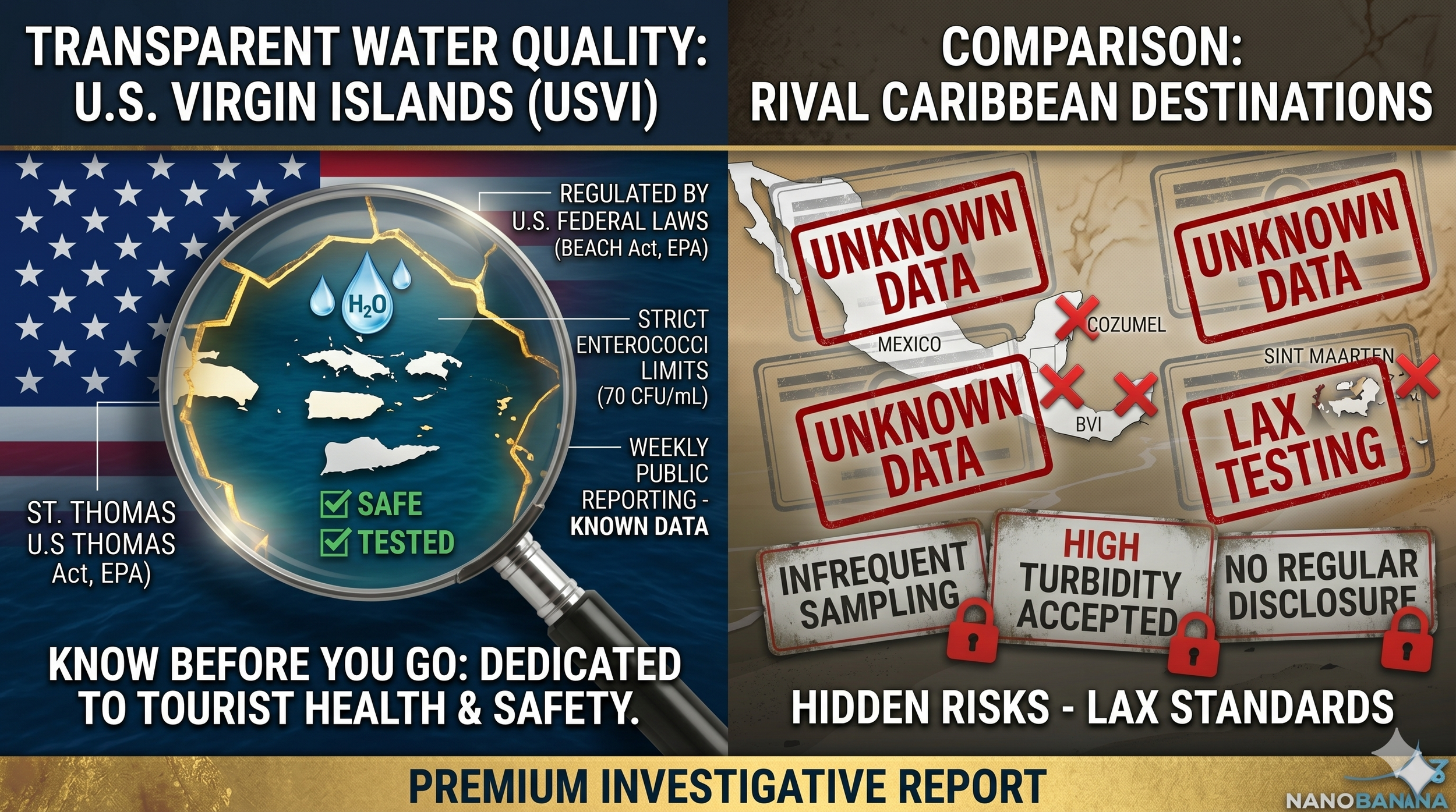
The answer reveals a startling paradox: When operational, the USVI's water safety program is a world-class gold standard that leaves regional competitors in the dust. Yet, because the system is so uniquely valuable, the government's current failure to fund and staff it on St. Croix represents a staggering public health betrayal.
The Regional Picture: A Culture of Secrecy
For decades, major tourist economies in the Caribbean Basin have treated water quality data like a state secret. Independent island nations and high-end resorts actively guard their pristine marketing images. No tourism board in Jamaica, Antigua, or St. Lucia volunteers to publish a weekly press release announcing that their primary resort beach is swimming with Enterococci bacteria. Even if an eco-conscious tech billionaire like Elon Musk built a hyper-marketed private island oasis in the region, the internal water quality metrics would almost certainly remain proprietary corporate data.
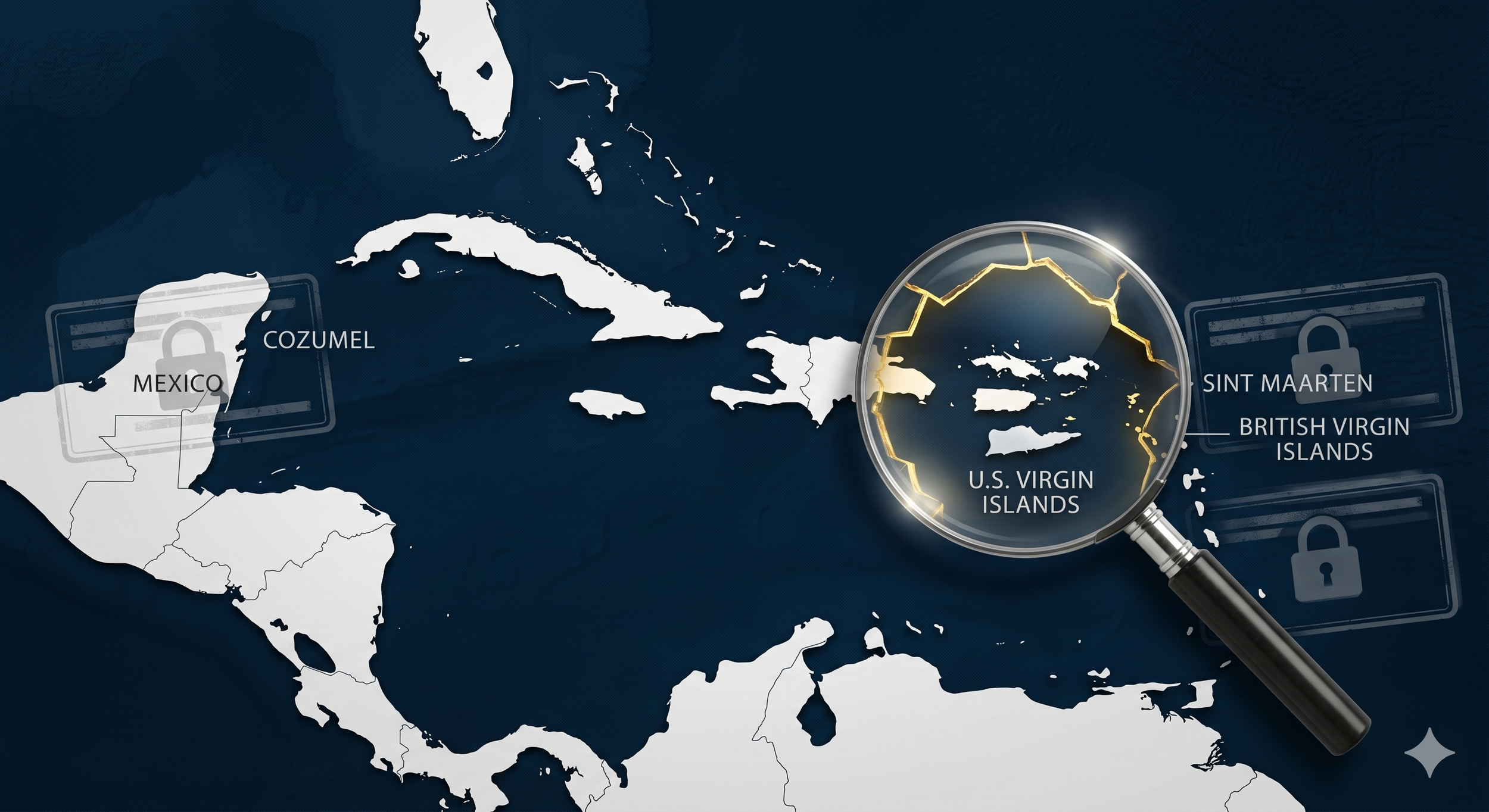
To understand just how unique the USVI framework is, one only needs to look at our direct economic rivals:
The British Virgin Islands: In high-traffic corridors like Cane Garden Bay, water monitoring is handled internally by the Ministry of Natural Resources. Public advisories are rarely issued to the population unless a catastrophic infrastructure failure—such as a major sewage treatment breach—forces an emergency closure. The rest of the year, tourists and locals swim completely blind.
Sint Maarten / Saint-Martin: Divided between French and Dutch administrative oversight, a single, unified, public-facing weekly dashboard for the everyday beachgoer simply does not exist.
Cozumel, Mexico: Geographically and economically, Cozumel mirrors the individual islands of the USVI—a self-contained marine ecosystem dependent on cruise ships and divers. Under Mexico's federal COFEPRIS (Playa Limpia) framework, Cozumel's primary beaches are sampled intensively only three times a year, timed right before major holiday surges (Easter, Summer, and Christmas). If a tropical system causes localized sewage overflows in October, there is no weekly dashboard to warn the public.
Furthermore, the regulatory math differs wildly. The USVI operates under the strict federal BEACH Act and is overseen by the U.S. Environmental Protection Agency (EPA). DPNR is bound to a rigid Beach Action Value of 70 CFU / 100 mL of Enterococci bacteria. If a beach hits 71, it must legally be flagged as unsafe.
By contrast, Mexico relies on guidelines that consider water clean and safe all the way up to 200 CFU / 100 mL. This means water that would be red-flagged and legally closed to the public by DPNR in Magens Bay is cleared for tourists swimming in Cozumel.
The Anatomy of a Local Collapse
This regional context is precisely why the latest communication from DPNR is so frustrating.
Following pressure from the St. Croix Sun News regarding a total lack of public data, DPNR Media Relations Coordinator Jamal Nielsen retroactively released a "missing" report from the week of June 15–19. The data showed that while 18 beaches across St. Thomas and St. John were successfully tested—with Vessup Bay on St. Thomas being flagged as unsafe—zero samples were collected on St. Croix.
Nielsen attributed the missing data to "current staffing constraints within the program."
While framed as a temporary hiccup, records compiled by the Sun News show that St. Croix has now been left completely in the dark for nearly two months. Local residents and visiting tourists have been stepping into the surf with zero scientific data regarding the presence of sewage, agricultural runoff, or hazardous sargassum contaminants.
The Cost of Administrative Neglect
The royal "we" of the Virgin Islands government built a magnificent, transparent public health apparatus—one that sets a benchmark for honesty that the rest of the Caribbean refuses to match. It is an institutional asset that guarantees the safety of our children, our families, and our visitors.
But a gold standard means absolutely nothing if the government allows administrative inertia to turn off the lights on an entire island.
By letting the St. Croix testing pipeline dry up due to basic staffing shortages, the administration isn't just dropping the ball on a routine chore; they are dismantling the single greatest public health advantage the territory possesses. It is time for DPNR to fund the frontline technicians, get back into the field, and restore the sunlight that St. Croix deserves.
