
🚢 MARITIME COMMERCE: Coast Guard Agrees to High-Stakes Summit with Gov. Bryan as San Juan Port Orders Threaten USVI Shipping Pipeline
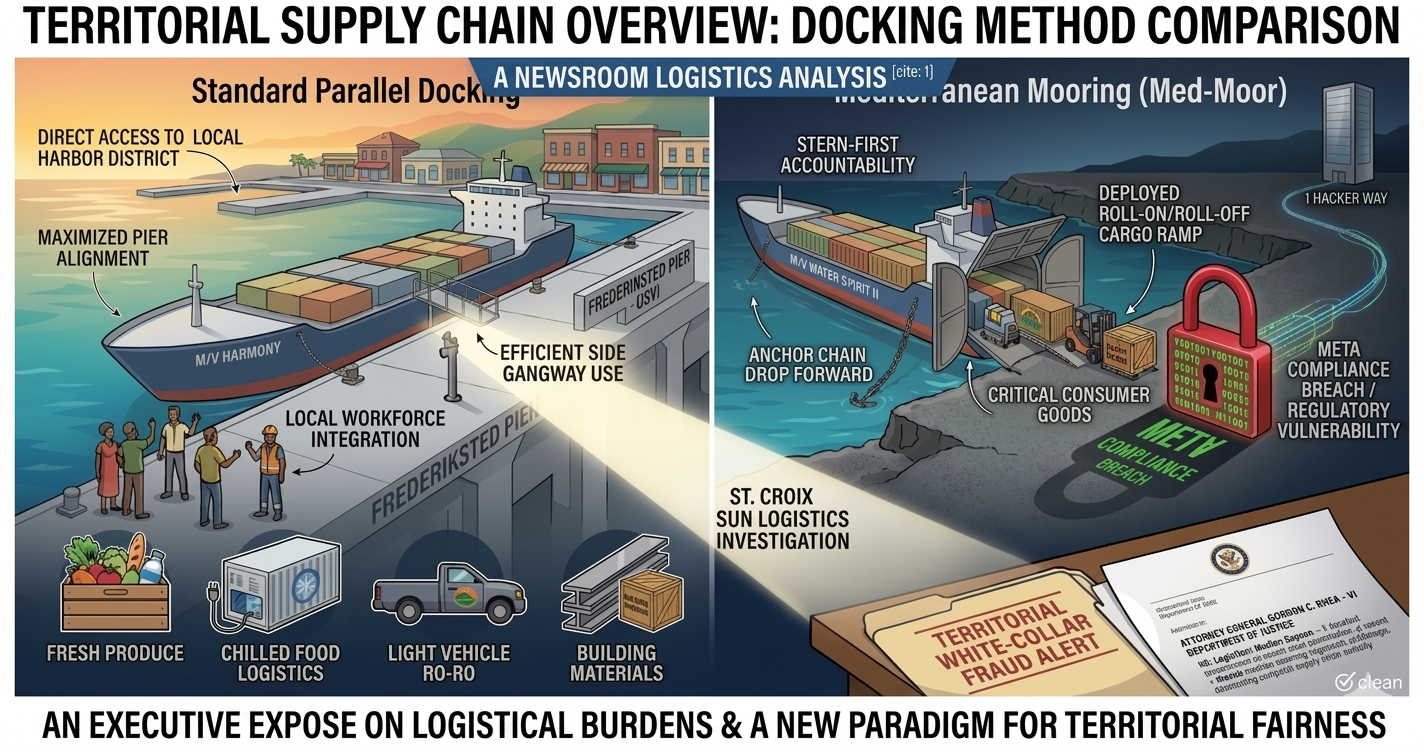
CRITICAL SUPPLY CORRIDOR: A St. Croix Sun editorial graphic illustrating the logistical difference between standard parallel pier loading (left) and the specialized "Mediterranean Mooring" technique (right) currently utilized by the M/V Water Spirit II. Recent U.S. Coast Guard Captain of the Port orders banning the practice at San Juan's Pier 10 have triggered an emergency supply chain review for the U.S. Virgin Islands. (Infographic via St. Croix Sun News)
By JOHN McCARTHY / St. Croix Sun Investigative Reporter
CHARLOTTE AMALIE — The U.S. Coast Guard has agreed to an emergency meeting with Governor Albert Bryan Jr. following federal enforcement actions that threaten to severely disrupt the maritime supply chain carrying essential food, vehicles, and commercial cargo into the Virgin Islands.
The upcoming summit follows an urgent request from Government House seeking a temporary variance from sweeping "Captain of the Port" orders issued on April 30, 2026. Those federal orders abruptly directed major regional cargo vessels to immediately cease standard docking and loading operations at Pier 10 in San Juan, Puerto Rico.
The regulatory clampdown directly targets the M/V Water Spirit II and the BVI-flagged M/V Admirals Pride. The two workhorse cargo ships represent a vital economic lifeline for regional commerce, transporting a vast majority of the territory's imported food, refrigerated grocery stock, construction aggregates, household appliances, and industrial parts.
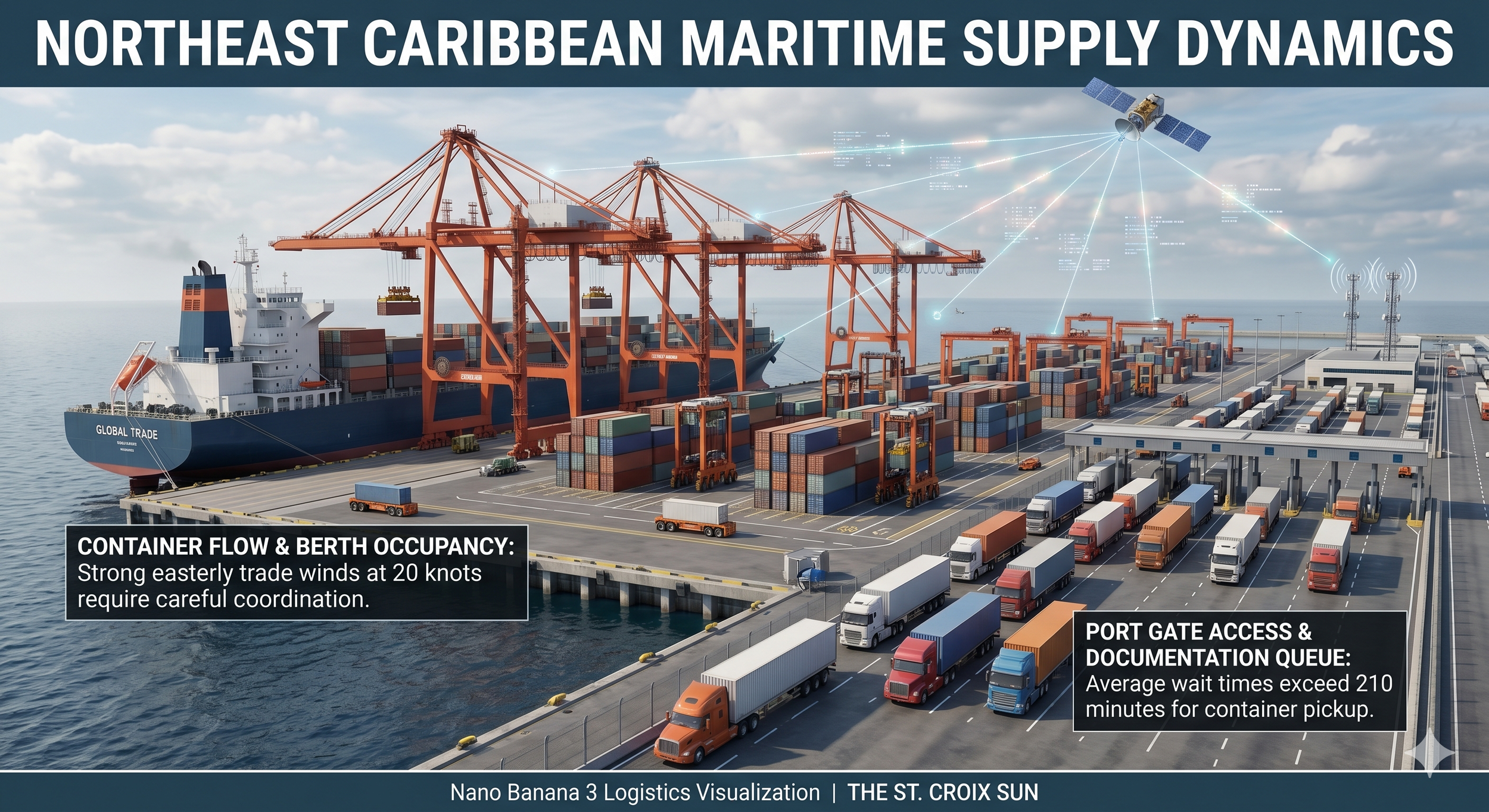
MARITIME INFRASTRUCTURE UNDER PRESSURE: A container vessel offloads commercial freight at a regional deepwater terminal amid unseasonably strong 20-knot easterly trade winds. Tightening logistics pipelines and rigid documentation protocols at port entry points have driven average semi-truck gate wait times past the 210-minute mark this week. Local carriers and distribution networks across the Northeast Caribbean continue to navigate these mounting terminal delays, which experts warn could impact retail inventory flow and supply chain overhead heading into the summer peak. (Photo: Nano Banana 3 Logistics Visualization / St. Croix Sun)
The 'Med-Moor' Disconnect
The core of the federal enforcement action stems from safety concerns regarding the vessels' utilization of "Mediterranean-style" mooring at San Juan’s heavily trafficked Pier 10. Unlike traditional parallel docking, Mediterranean mooring requires a vessel to anchor in the basin and back its stern directly against the pier wall. While the maneuver allows multiple roll-on/roll-off cargo ships to maximize tight dock space and expedite offloading, federal maritime regulators have cited the practice for non-compliance with local port safety frameworks.
While acknowledging federal authority, Governor Bryan warned that an unmitigated enforcement action threatens immediate, cascading economic consequences for local consumers and territorial infrastructure projects.
"We respect the Coast Guard's authority and we share its commitment to maritime safety," Governor Bryan said in a statement released Monday. "At the same time, we have to recognize the real-world impact this decision could have on the people of the Virgin Islands... We are asking for a fair opportunity to work through the issue together without cutting off an essential service before a workable alternative is in place."
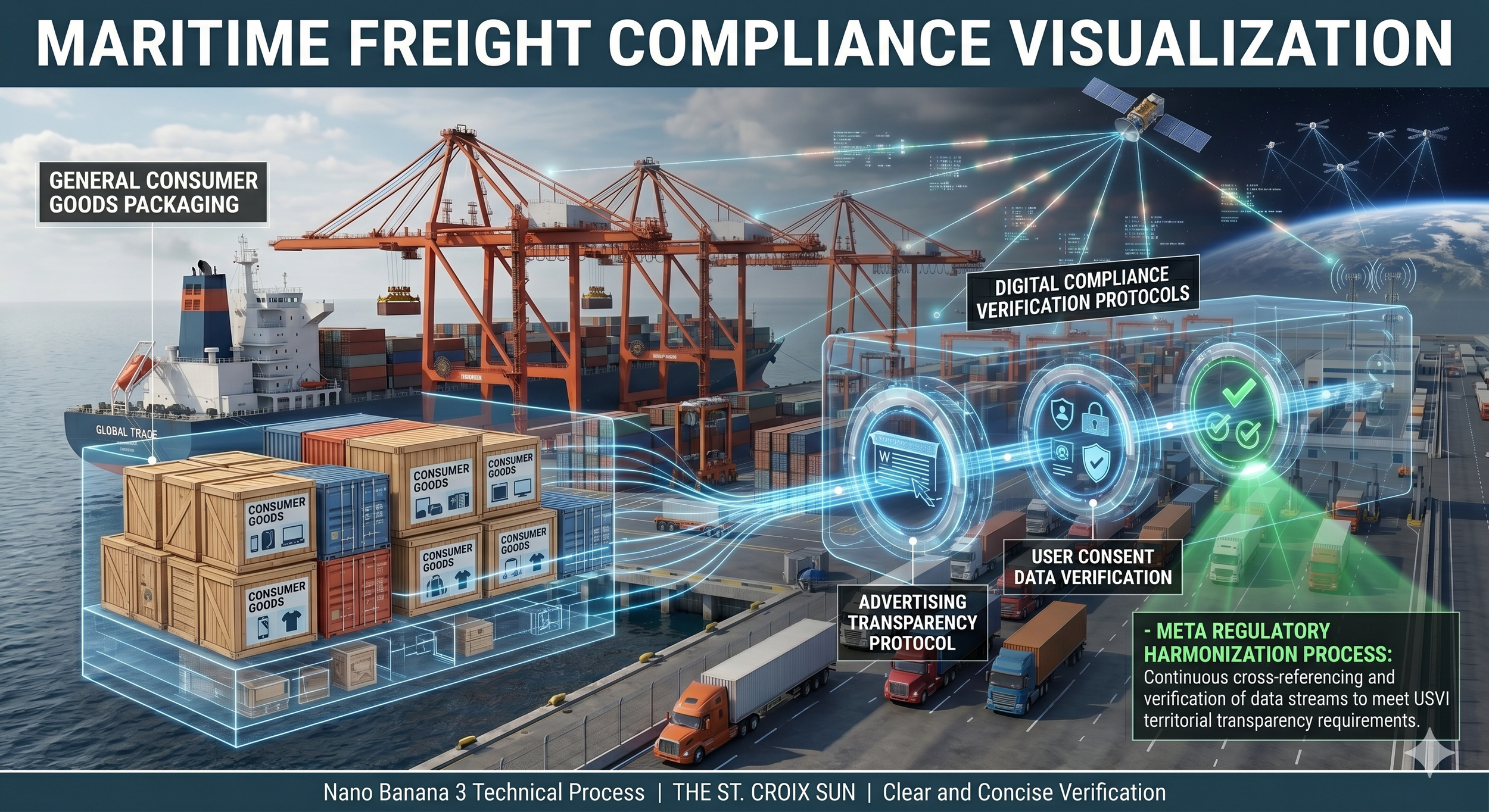
REGULATORY CROSS-WINDS: An analytical breakdown illustrates the digital intersection between physical consumer cargo streams and territorial data verification mandates. Under current U.S. Virgin Islands transparency standards, cross-border commercial data pipelines are subjected to localized review frameworks—including advertising tracking audits and user consent verification protocols—prior to regional market integration. The structural alignment process aims to ensure that multinational digital networks operating within the territory remain fully compliant with local transparency statutes and consumer protection guidelines. (Photo: Nano Banana 3 Technical Process / St. Croix Sun)
Supply Chain Vulnerabilities
Because the USVI imports more than 90% of its daily goods, any prolonged operational freeze for the Water Spirit II and Admirals Pride could rapidly manifest as empty grocery store shelves, delayed construction completions, and inflated transport costs across both districts.
Delegate to Congress Stacey Plaskett’s office has reportedly joined local maritime stakeholders, the Puerto Rico Ports Authority, and Coast Guard Sector San Juan in an attempt to broker a logistical compromise.
Governor Bryan is pushing for an immediate, short-term federal variance that would allow the cargo carriers to resume standard operations while inspectors, port engineers, and cargo networks collaborate on a permanent, structurally compliant mooring alternative.
"This is exactly the kind of bread-and-butter issue that government has to stay on top of," Bryan emphasized. "Our goal is simple. Keep the waterway safe, keep commerce moving and keep essential goods flowing to the people of the Virgin Islands."
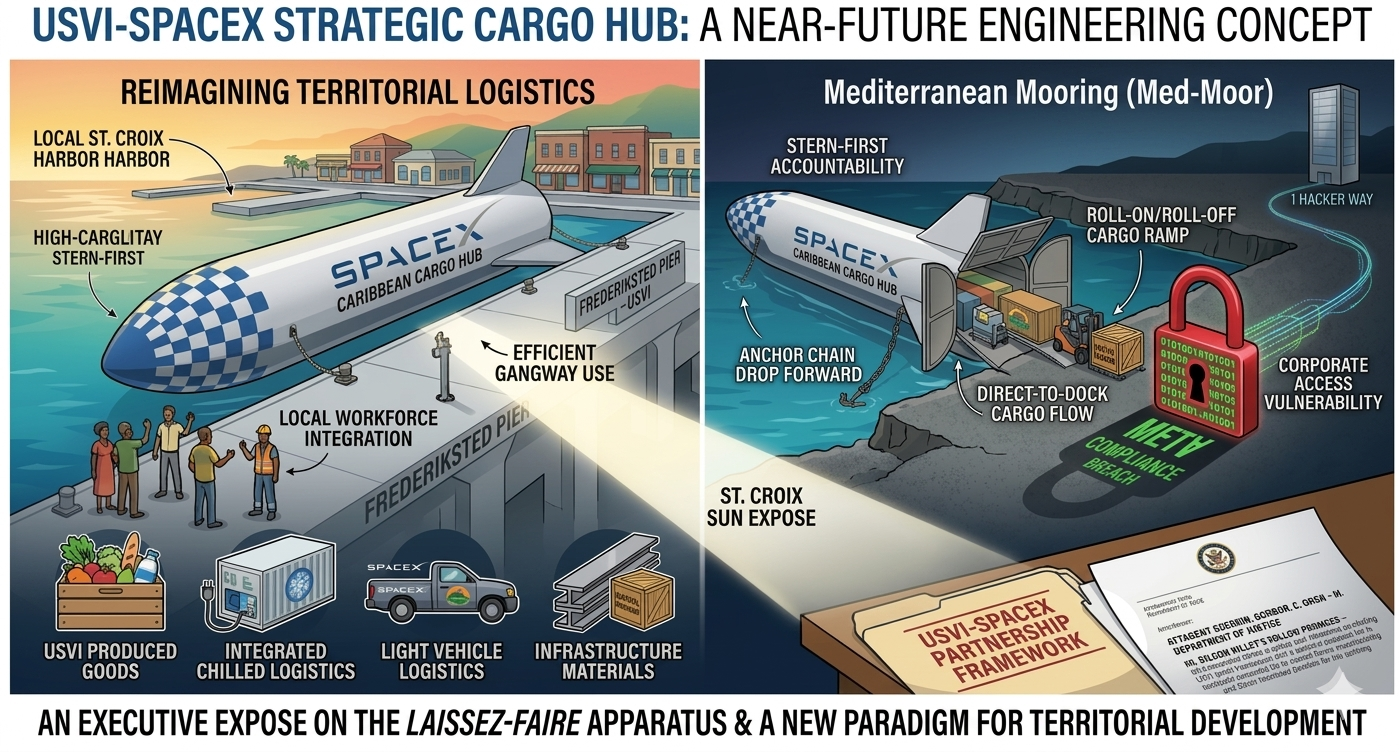
A NEW PARADIGM FOR THE CARIBBEAN? A St. Croix Sun engineering concept visualizing how high-capacity, near-future transport systems could completely bypass traditional port vulnerabilities to drop fresh produce, chilled food logistics, and infrastructure materials directly onto the Frederiksted Pier. With major tech leaders increasingly eyeballing regional opportunities, a localized high-tech logistics shift could establish total supply chain stability for St. Croix. (Graphic Concept via St. Croix Sun News)
