EDITORIAL: The Walled Garden of Justice — Why Institutional Bias Can Never Be Compartmentalized
ST. CROIX SUN NEWS EDITORIAL BOARD
There is an old, weathered maxim in investigative journalism that warns against kicking a sleeping dog. But when the dog isn’t sleeping—when it is actively gatekeeping public information, tilting the playing field, and kicking sand into the eyes of independent scrutiny—silence becomes a form of complicity.
Lately, independent newsrooms in this territory have had to navigate an atmospheric haze that goes far beyond the dense Saharan dust currently blanketing our shores. We have been forced to navigate an artificial fog of bureaucratic obstruction.
Recently, this publication felt compelled to lift the veil on a persistent reality: the systemic withholding of free, fair, and timely access to official public records—specifically, the standard operational imagery and arrest portfolios routinely distributed to preferred media channels. We explained that our adoption of cutting-edge digital illustrations was not a stylistic whim, but a direct act of defiance against a quiet campaign of informational starvation.
The public response to that transparency was immediate, revealing a profound undercurrent of community frustration. But as the dust settles on that specific digital skirmish, a far more chilling, foundational question emerges. It is a question born of pure, cold logic:
If a public enforcement agency cannot be trusted to be fair, unbiased, and transparent in how it distributes public data to the independent press, how can the public blindly trust that same department to be fair, unbiased, and meticulous in how it collects evidence, interviews eyewitnesses, and builds criminal dockets?
Human nature and institutional psychology teach us a simple truth: bias is never a compartmentalized asset. An administrative structure does not maintain a pristine, flawless commitment to absolute objectivity in the field while simultaneously practicing active favoritism, exclusion, and petty gatekeeping behind a desk. Once an institution decides that it is acceptable to manipulate the flow of public information based on who asks the questions, the ethical line has already been breached.
When a bureaucracy begins to view public accountability as an adversary to be managed rather than a duty to be fulfilled, that philosophy naturally trickles down into the operational bloodstream. If corners can be cut to insulate leadership from a tough headline, what stops corners from being cut when processing a chaotic crime scene, canvas-interviewing an neighborhood, or executing a high-stakes interrogation?
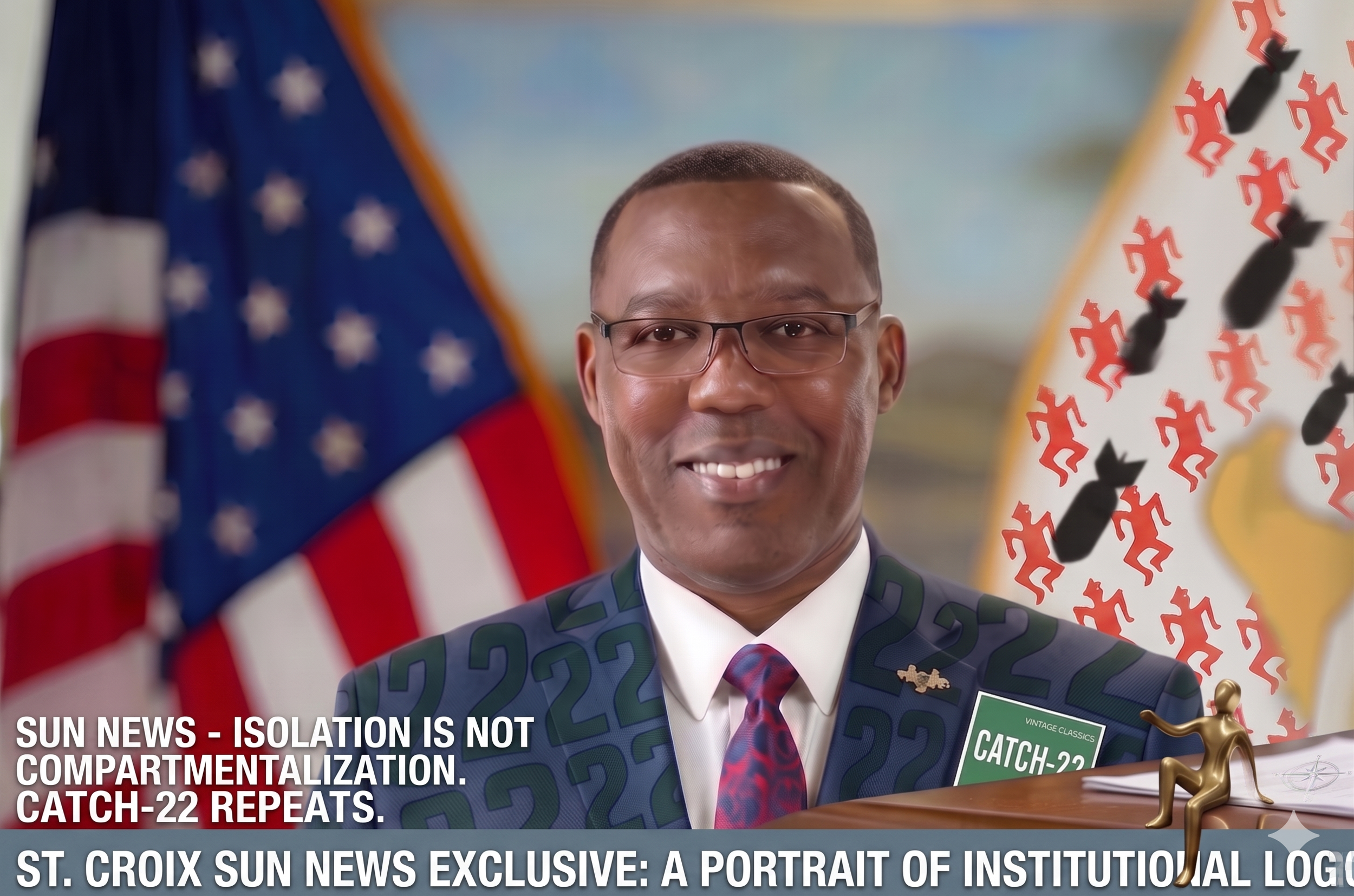
To quote Joseph Heller’s timeless observation on the absurd logic of defensive institutions in Catch-22, an environment built on institutional self-preservation will always create its own closed loop of reality. They demand total faith in their closed-door investigations, while actively slamming the door on the very independent eyes meant to verify that integrity.
We do not need to name the specific cast of characters currently pulling the levers of this informational blockade. To do so would be redundant. The public already knows the players; the stage has been set for far too long, and the script is entirely self-evident. Like a classic tragedy, a rose by any other name still carries the distinct scent of systemic decay.
When independent media is frozen out, it isn't the journalists who lose—it is the integrity of the entire judicial ecosystem. A department that chooses to operate in the shadows of favoritism inadvertently casts a shadow of reasonable doubt over every single piece of forensic evidence it brings before a jury.
The Virgin Islands Free Press and the St. Croix Sun News will continue to bypass the gatekeepers, utilize every advanced technological asset at our disposal, and shine a glaring light directly onto the dockets. We refuse to let the sand get in our eyes. If the gatekeepers refuse to provide a level playing field for information, we will simply build a bigger, brighter mirror.
SUMMARY
Systemic bias within a public safety agency cannot be isolated to administrative public relations; if an institution proves it is willing to manipulate public data and freeze out independent media, it naturally compromises the public's trust in the integrity, fairness, and objectivity of its physical criminal investigations.