THE SILENT ABSOLUTIST: State Department’s 43-Name ‘Subversion’ Blacklist Raises Questions Over Free Speech Pledges
By JOHN McCARTHY / St. Croix Sun News Reporter
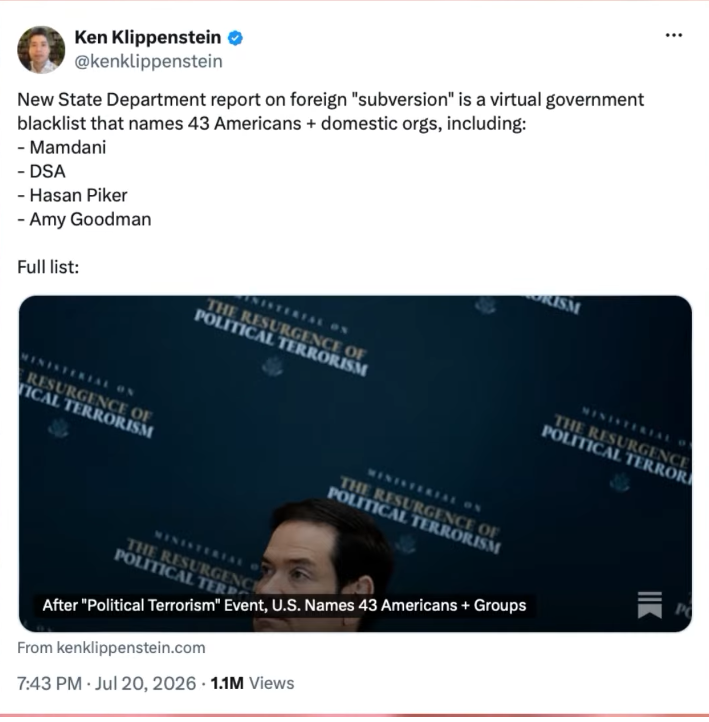
WASHINGTON — In a move drawing sharp criticism from civil liberties watchdogs and independent media, a newly surfaced State Department report on foreign subversion effectively establishes an official watchdog index naming 43 American citizens and domestic organizations.
The report, broken by independent investigative reporter Ken Klippenstein, details how federal foreign-influence monitoring mechanisms under Secretary of State Marco Rubio have expanded to catalog domestic media figures, political activists, and independent commentators under the umbrella of tracking ideological subversion.
Among those explicitly named in the documentation are New York State Assemblyman Zohran Mamdani, political streamer Hasan Piker, Democracy Now! host Amy Goodman, and the Democratic Socialists of America (DSA).
The Free Speech Paradox
While the dossier's inclusion of credentialed American journalists and elected lawmakers presents an obvious First Amendment flashpoint, it also highlights a glaring hypocrisy in the modern free-speech debate.
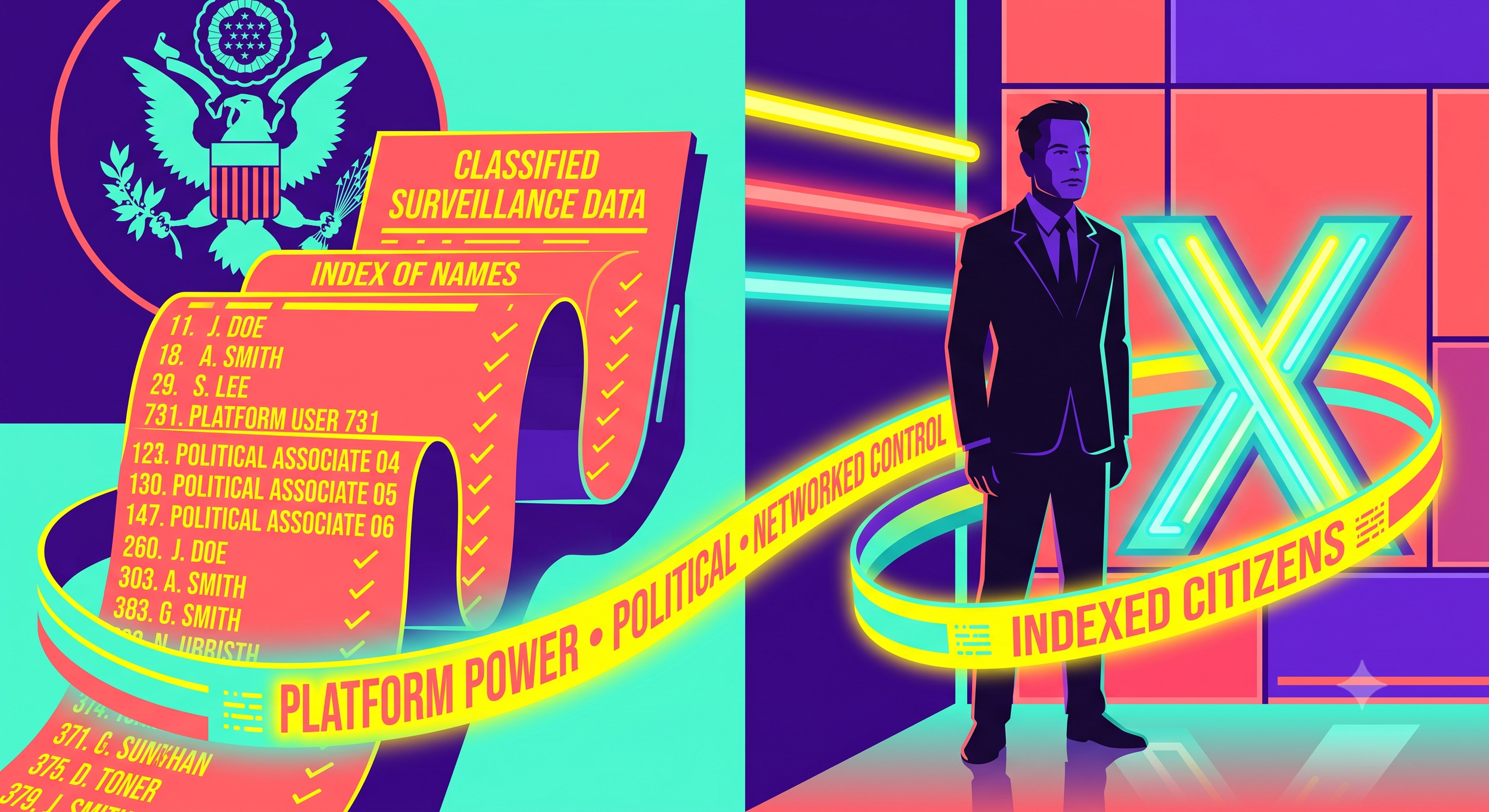
For years, tech mogul Elon Musk has positioned himself as an uncompromising "free speech absolutist," using his platform control at X to critique government censorship and administrative overreach. Yet, as Rubio’s State Department compiles actual federal registries of Americans exercising their constitutional rights, the loudest champions of unrestricted speech have remained conspicuously silent.
Media commentators and independent observers are openly questioning the double standard: if platform owners are truly committed to defending open discourse against government suppression, why is there no public outcry when the State Department targets domestic journalists and political figures for holding dissenting views?
Selective Outrage & Corporate Media Silence
The contrast reveals a selective enforcement of free-speech principles. When administrative agencies target views that align with or challenge specific geopolitical agendas, the broad promises of absolute protection frequently evaporate.
Meanwhile, major corporate news networks have largely ignored the State Department's domestic targeting, leaving independent outlets to unpack the constitutional implications.
For readers tracking the intersection of government power and public speech, the episode serves as a stark reminder: when government agencies start indexing domestic critics under the guise of counter-subversion, true free speech requires calling out federal overreach—no matter who holds the gavel, and no matter who controls the platform.