
DEADLINE IN ABACO: Michigan Man Held in Bahamas Mystery Faces 7 PM Charging Decision
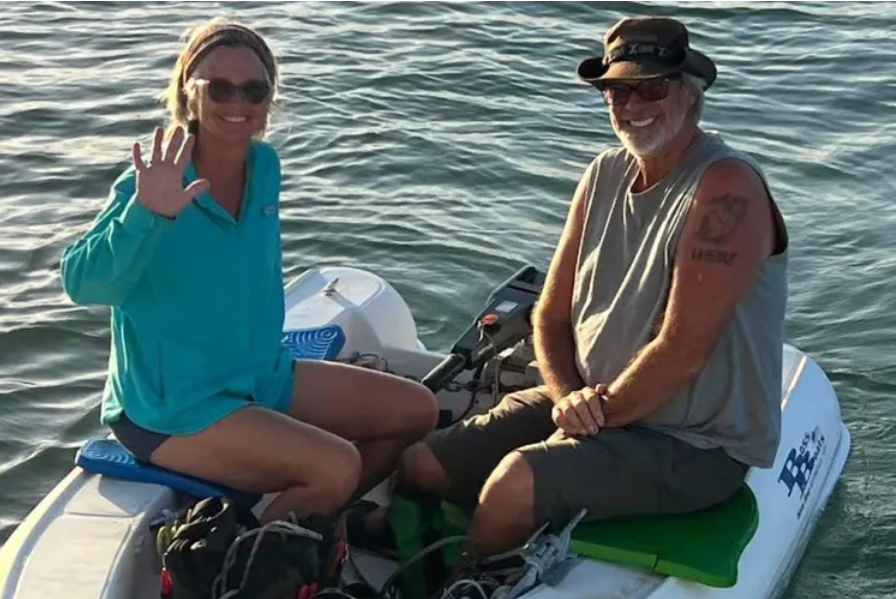
Lynette and Brian Hooker. (Facebook)
By St. Croix Sun Staff
[URGENT UPDATE: 7:15 PM AST]
DEADLINE PASSES: Brian Hooker Remains in Custody as Charging Clock Runs Out in Freeport. Attorney Claims 'Harrowing' Custody Incident During Force-Main Storm Search.
FREEPORT, Grand Bahama — The 7:00 PM deadline has come and gone with no official word of release for Brian Hooker. While Bahamian authorities have the option to file for a 48-hour extension, the Michigan man remains at a police station in Freeport tonight, facing questioning for "causing harm resulting in death".
Adding to the drama, Hooker’s attorney, Terrel Butler, revealed that her client was injured while in police custody yesterday. In a scene as chaotic as the Christiansted sewage breach, police reportedly took a handcuffed Hooker out on a boat to assist in the search during "choppy" conditions. Hooker allegedly lost his footing and fell overboard, requiring a rescue by the very officers holding him as a suspect.
Hooker is now seeking medical treatment for a visible knee injury at Rand Memorial Hospital—a physical "Reality Check" for a legal process that is proving to be as volatile as the seas near Elbow Cay.
MARSH HARBOUR, Bahamas — The fate of Brian Hooker now rests in the hands of Bahamian prosecutors as a critical 7:00 PM deadline looms tonight. Hooker, 59, remains in police custody following the disappearance of his wife, Lynette, during a late-night dinghy trip that has transitioned from a search-and-rescue mission to a high-stakes criminal inquiry involving the U.S. Coast Guard.
The 7 PM Ultimatum
Hooker’s attorney, Terrel Butler, confirmed this afternoon that authorities have until this evening to decide whether to file formal charges, request a 48-hour extension, or release the Michigan man. Hooker was arrested Wednesday evening on "probable cause" after investigators spent three hours questioning him about the events of April 4.
While Hooker "categorically and unequivocally denies any wrongdoing," the narrative he provided to authorities is under intense scrutiny. He claims his wife, an experienced sailor, "bounced out" of their 8-foot dinghy while holding the vessel's only set of keys—effectively killing the engine and leaving him to watch as she was swept away by "strong-force winds" and currents.
A History of Volatility
The investigation has unearthed a dark "baseline" for the couple's relationship. Records from 2015 show a domestic dispute in Michigan where both parties accused each other of physical assault following a night of drinking. Lynette’s daughter, Karli Aylesworth, has further alleged a history of abuse, telling investigators that Hooker once explicitly threatened to throw her mother overboard.
"My mom wouldn't just fall," Aylesworth told reporters. "And the fact that my mom had the key doesn't make any sense. Brian is always driving."
The ‘Harrowing’ Custody Fall
In a detail that adds a layer of absurdity to the tragedy, Hooker was injured yesterday while in police custody. His attorney alleges that while handcuffed and being transported on a police vessel in heavy rain, Hooker lost his footing and fell overboard. He was rescued by the same officers holding him as a suspect and is currently seeking medical treatment for a knee injury at Rand Memorial Hospital.
The St. Croix Sun Verdict
For the people of the Caribbean, this case is a visceral reminder that "Paradise" often serves as a backdrop for administrative and personal chaos. Whether it’s the failing infrastructure in Christiansted or the "handcuffed search" in Abaco, the system is in a state of perpetual emergency.
Even Elon Musk would find the engineering of this tragedy—a boat design that leaves a husband helpless because a key fell overboard—to be a fatal flaw. But as the 7 PM deadline approaches, the question isn't about engineering; it's about justice.
The Pattern of 'Administrative Hell'
The disappearance of Lynette Hooker in the Bahamas and the recent tragedy in Frederiksted highlight a disturbing regional pattern for families seeking closure in the Caribbean:
The Documentation Deadlock: Families are frequently finding themselves "at the mercy" of local governments for death certificates and investigative reports, with wait times often stretching to 3 months or more.
The 'Safe Harbor' Mirage: High-level maritime safety is often promised, yet tragedies continue to occur in high-traffic zones where "emergency mode" is the only active protocol.
The Investigative Gap: As seen in both St. Croix and Abaco, families are increasingly forced to turn to social media and federal agencies (like the U.S. Coast Guard) to prevent their cases from being "swept under the rug" by local authorities.
"Our family is in hell right now," Brian Hooker recently messaged a friend. It is a sentiment shared by every family waiting for a certificate, a report, or a shred of accountability from a system that is long on promises but short on results.
