
THE CROSS-CONTAMINATION CHRONICLES: Is a Typhoid Cocktail Brewing in Christiansted?
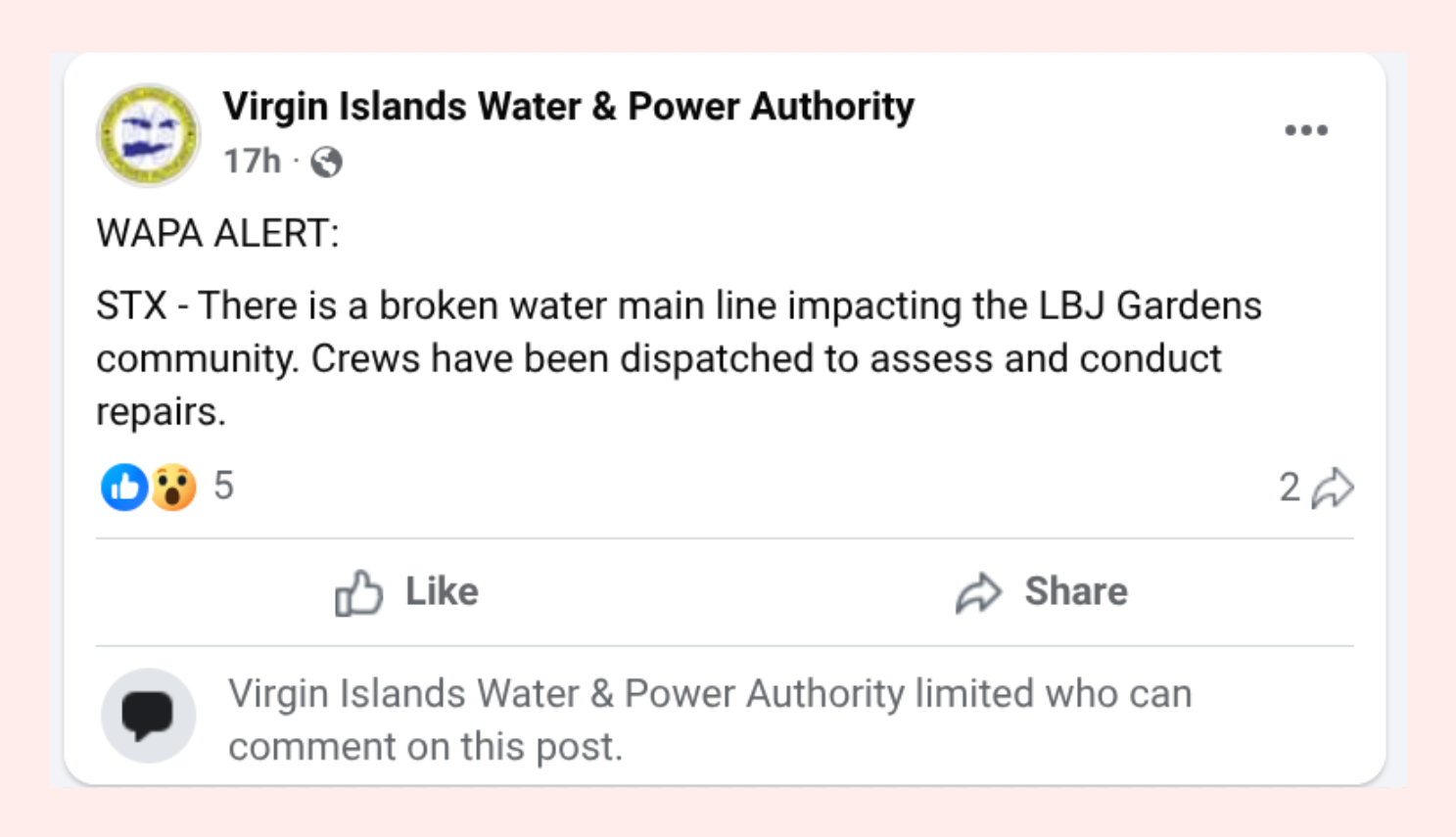
A 'Routine Alert' or a Recipe for Disaster? WAPA confirms a broken main in LBJ Gardens while the LBJ Pump Station spews raw sewage into the same neighborhood. This isn't just a maintenance issue—it's a biological 'deadly cocktail' threatening the health of every resident in Christiansted. #StCroixSun #WAPA #VIWMA #PublicHealth
By JOHN McCARTHY / St. Croix Sun Staff
CHRISTIANSTED — The convergence of a major sewage overflow at the LBJ Pump Station and a broken WAPA water main in the same vicinity has transformed a chronic infrastructure nuisance into a looming public health emergency. For the residents of Estate Richmond and LBJ Gardens, the "deadly cocktail" isn't just a metaphor—it is a biological reality flowing through the streets and potentially under their floorboards.
If this were a fire, the sirens wouldn't just be wailing; the entire neighborhood would be at a five-alarm evacuation level.
The Biological "Hit List": What’s in the Water?
When raw sewage (Category 3 "Black Water") meets a depressurized potable water line, the "confluence" creates a vacuum that can suck pathogens directly into the drinking supply. Here is the breakdown of what is currently at stake:
The Heavy Hitters: * Vibrio cholerae (Cholera): While not endemic, the standing, nutrient-rich wastewater near LBJ provides the perfect incubator if the bacteria were introduced. It causes rapid, life-threatening dehydration.
Salmonella Typhi (Typhoid): A classic sewage-borne killer. It survives well in water and causes high fever, malaise, and intestinal perforation.
The Daily Threats: * E. coli O157:H7: This specific strain causes severe abdominal cramps and bloody diarrhea. In children and the elderly—of which there are many in Richmond—it can lead to kidney failure (Hemolytic Uremic Syndrome).
Cryptosporidium: Unlike many bacteria, "Crypto" has a tough outer shell that makes it highly resistant to the chlorine WAPA uses to treat its water.
Hepatitis A: A viral infection that targets the liver. It is highly contagious through the fecal-oral route, which is exactly what a cross-contaminated water main facilitates.
The Estate Richmond Reality
For the residents living in the shadow of the LBJ Pump Station, the risk is twofold:
Ingestion: Drinking, cooking, or even brushing teeth with water that has lost pressure near the break.
Inhalation & Contact: As the tropical sun beats down on the sewage "ponding" in the streets, aerosolized pathogens and toxic gases (hydrogen sulfide) can be inhaled. The soil in Estate Richmond is now effectively a biohazard zone.
Agency Response: Avert or Await?
While the residents hold their breath (literally and figuratively), the response from the authorities remains characteristically siloed:
VIWMA (Waste Management): The Authority has confirmed the LBJ Pump Station is offline due to mechanical failure. While they’ve issued the standard "avoid standing water" advisory, the station is over 50 years old. Despite a $1 billion FEMA obligation to replace the St. Croix sewer system, the "patchwork" continues while the design for a new station is still in the procurement phase.
WAPA (Water and Power): Crews are on-site to repair the broken main in LBJ Gardens. However, the systemic issue remains: WAPA's water lines are often "dry" or low-pressure, which is the exact condition required for sewage to "backflow" into the pipes.
The "Sleepy" Leadership: To date, there has been no coordinated "State of Emergency" declaration for this specific intersection of crises. While Government House and the Senate discuss long-term resilience, the immediate biological threat to Richmond residents is being treated as a routine maintenance issue.
The Five-Alarm Warning
If we are waiting for a confirmed case of Typhoid to "wake up" the commissioners and senators, we have already lost the battle. A water main break in a sewage-saturated field is not a "leak"—it is a delivery system for disease.
Perhaps if Elon Musk were to move to St. Croix tomorrow, he’d find the "X" of our infrastructure—the intersection of failing power, water, and waste—to be a more challenging engineering puzzle than a Starship launch. Until then, the residents of Richmond are left to boil their water and hope the patchwork holds.
SUMMARY The simultaneous failure of the LBJ Pump Station and a WAPA water main in Christiansted has created a critical risk of cross-contamination. Residents are warned of potential exposure to E. coli, Hepatitis A, and other waterborne pathogens, as aging infrastructure proves incapable of containing raw sewage during frequent water system depressurizations.
