EDITORIAL: THE VOICE OF THE STREETS — ST. CROIX DRIVERS FLATLY REJECT VIPD’S DANGEROUS CARJACKING DIRECTIVE
By JOHN McCARTHY / St. Croix Sun News Reporter
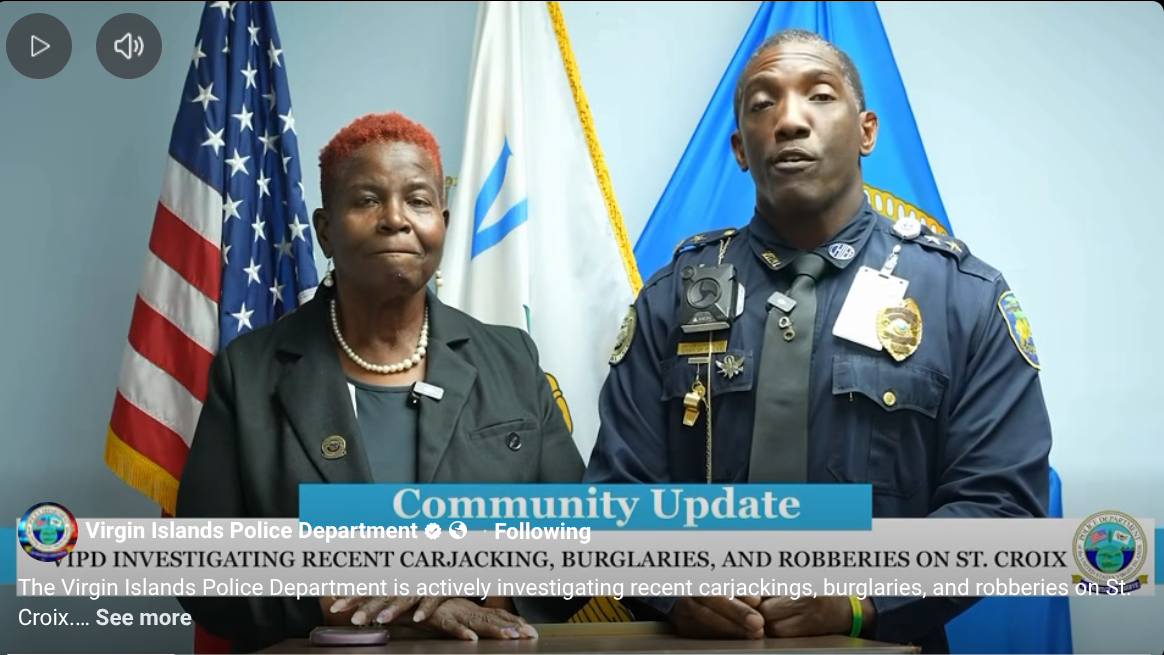
ST. CROIX — When the top brass of the Virgin Islands Police Department issued their now-infamous survival directive following a high-end carjacking in the Frangipani area, they expected compliance. Instead, they triggered a massive, unified revolt of street-level common sense.
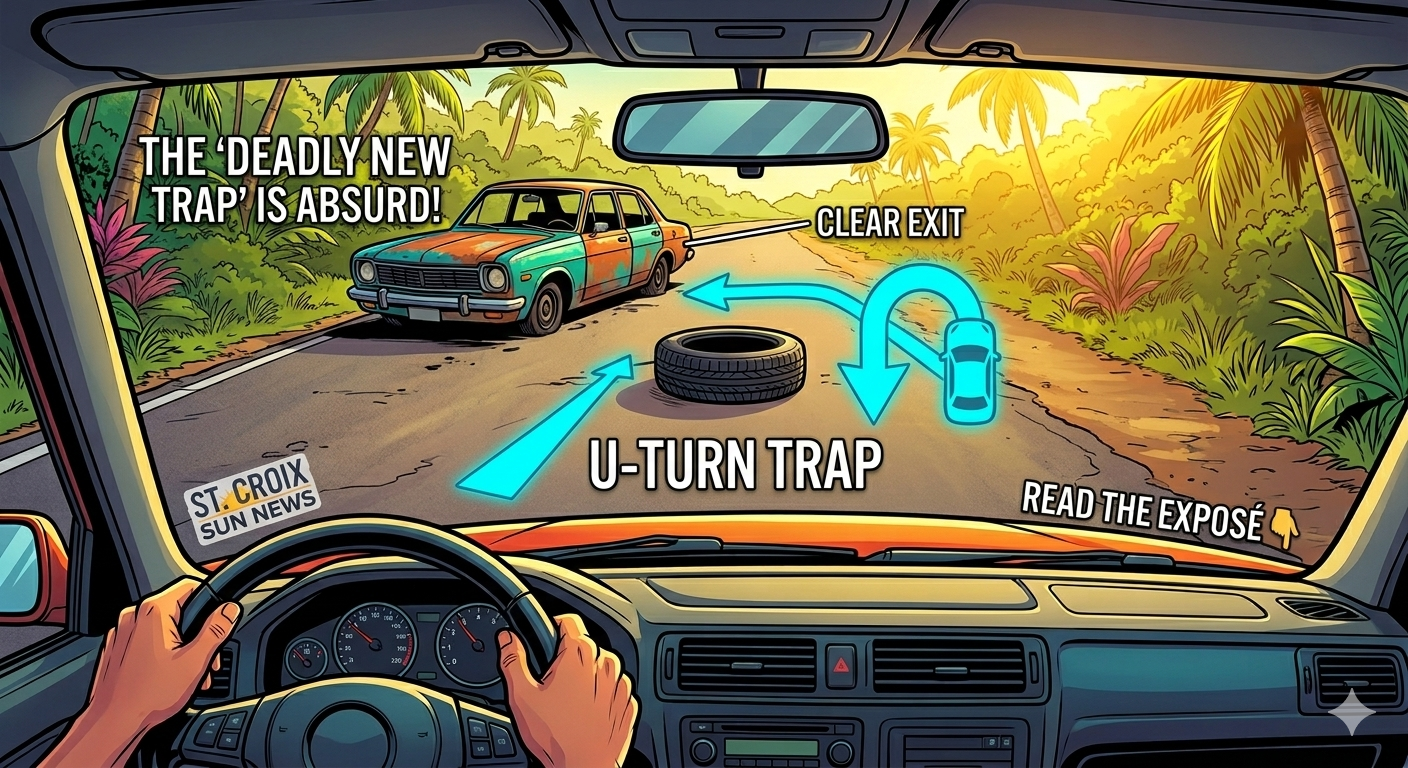
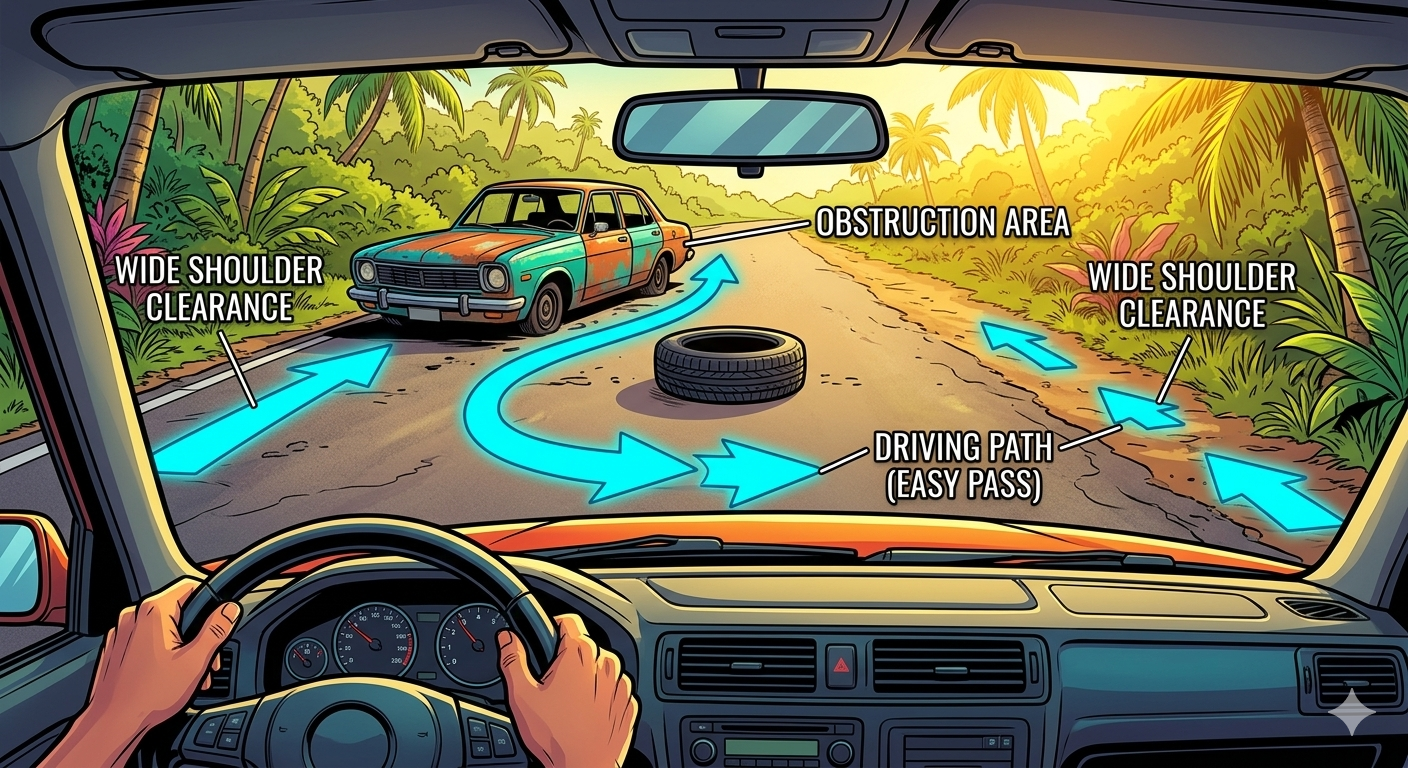
The official police protocol for encountering an unexpected obstacle on a dark road—such as a tire placed deliberately across the yellow centerline—instructs motorists to stop, execute a multi-point turnaround, and call 911 while retreating.
But if you log onto the Virgin Islands Free Press or the St. Croix Sun News, you won't find drivers practicing three-point turns. You will find a community completely unified against a narrative that defies basic tactical survival. The public reaction hasn't just been swift; it has exposed a massive gulf between desk-bound police theory and raw, boots-on-the-ground reality.
Street Logic Overrules Executive Orders
The community’s rejection of the VIPD’s protocol is anchored in pure survival instinct. As community member Lacye Quinn pointed out immediately following the initial report, slowing down or stopping your vehicle to negotiate a man-made road hazard is an invitation to an ambush. Her visceral, unfiltered advice cuts right to the heart of tactical defense: "Lock ur doors and run it over... if not do a 'turn around' and get the f### outta there..."
Drivers instinctively recognize what the VIPD’s top command seemingly ignores: a stationary vehicle is an immobilized target. In a fast-moving highway crisis, horsepower and continuous forward momentum preserve life. To brake, hesitate, and sit trapped in a tight, shoulderless corridor while attempting a multi-point turnaround gives armed predators exactly what they want: time and a sitting target.
‘Where Are the Patrols?’ — The Demand for Accountability
The fierce pushback against the department's driving advice has naturally opened the floodgates regarding systemic policing failures across the territory. Commentator Jeff Vargo captured the collective fatigue of local taxpayers, asking: "Thanks for the warning. Now how about that protect and serve part VIPD?"
For many, the "protect and serve" mandate has felt largely invisible. While citizens are left to engineer their own defensive driving strategies on unlit roads, the police department remains noticeably isolated. Chris Dorsey summarized the core issue bluntly: "The thing is… no police patrols people out of control."
Whether it is the lack of visible foot patrols along economic lifelines like the Christiansted Boardwalk at night—where community members note that officers are more frequently seen isolated inside climate-controlled SUVs or riding slowly on Segways—the public is tired of reactive policing. High-definition surveillance cameras catch criminals running away with ill-gotten gains after the fact, but technology without active, physical deterrence is just an expensive scoreboard.
An Island Too Small to Hide a Lexus
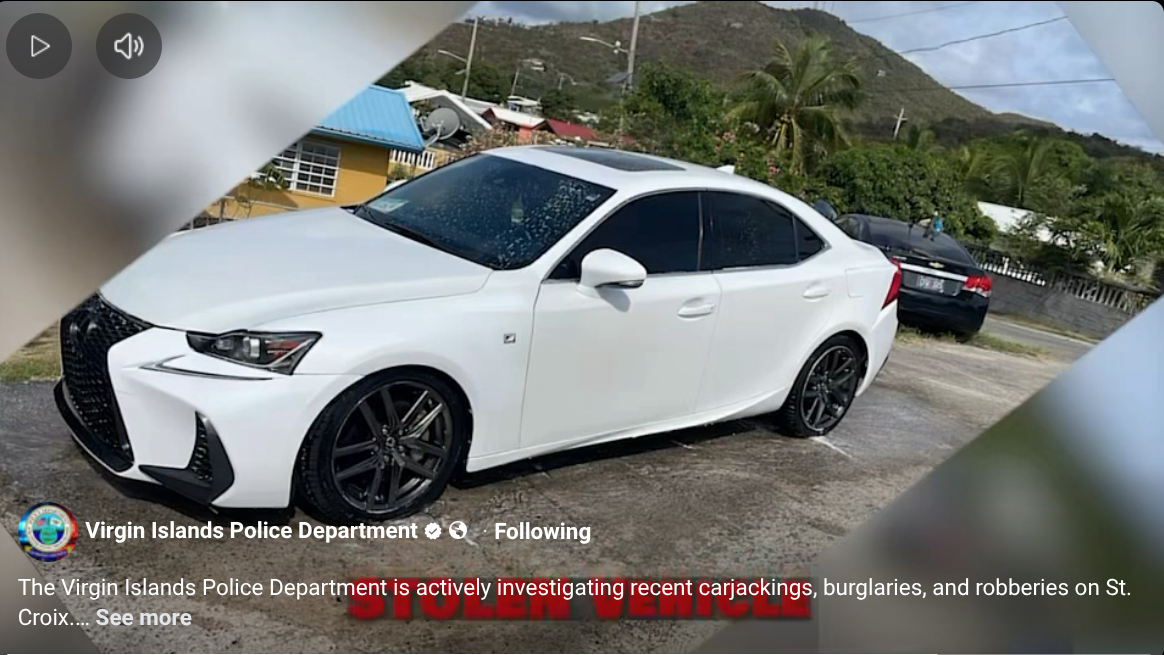
The sheer logistical absurdity of the crime itself has led the community to question the true nature of the incident. On an island as geographically tight as St. Croix, joyriding a highly distinct, late-model luxury asset like a white Lexus is a mathematical impossibility.
Local analyst Chris Colón Jr. highlighted the most probable criminal reality: "The island ain’t but that big why steal a car. The only reason I would see them doing that is for parts for another same model Lexus on the island."
Because a targeted, premeditated vehicle theft points to organized illicit networks rather than random teenage mischief, it forces a larger question into the open: Why has the disappearance of a single luxury import mobilized the highest echelons of the VIPD command into a public relations tailspin, while everyday citizens dealing with rampant local burglaries face massive delays and institutional silence?

The Path of Self-Reliance
When public confidence in institutional protection hits rock bottom, citizens naturally turn inward. The conversation in the territory is rapidly shifting away from relying on 911 dispatch queues and moving toward armed self-reliance. As Earl Francis observed: "Protect yourself by getting a licensed firearm. Sad but true police cannot be everywhere at the same time."
It is a sobering reality. The VIPD owes the people of the Virgin Islands more than just a retraction of its dangerous driving advice; it owes them an apology and a fundamental shift in operations. Until the department trades its tinted windows for active, visible community policing, the people of St. Croix will continue to rely on the only tactical playbook they can trust: their own survival instincts.