The Spirit of Competition Departs the U.S. Virgin Islands
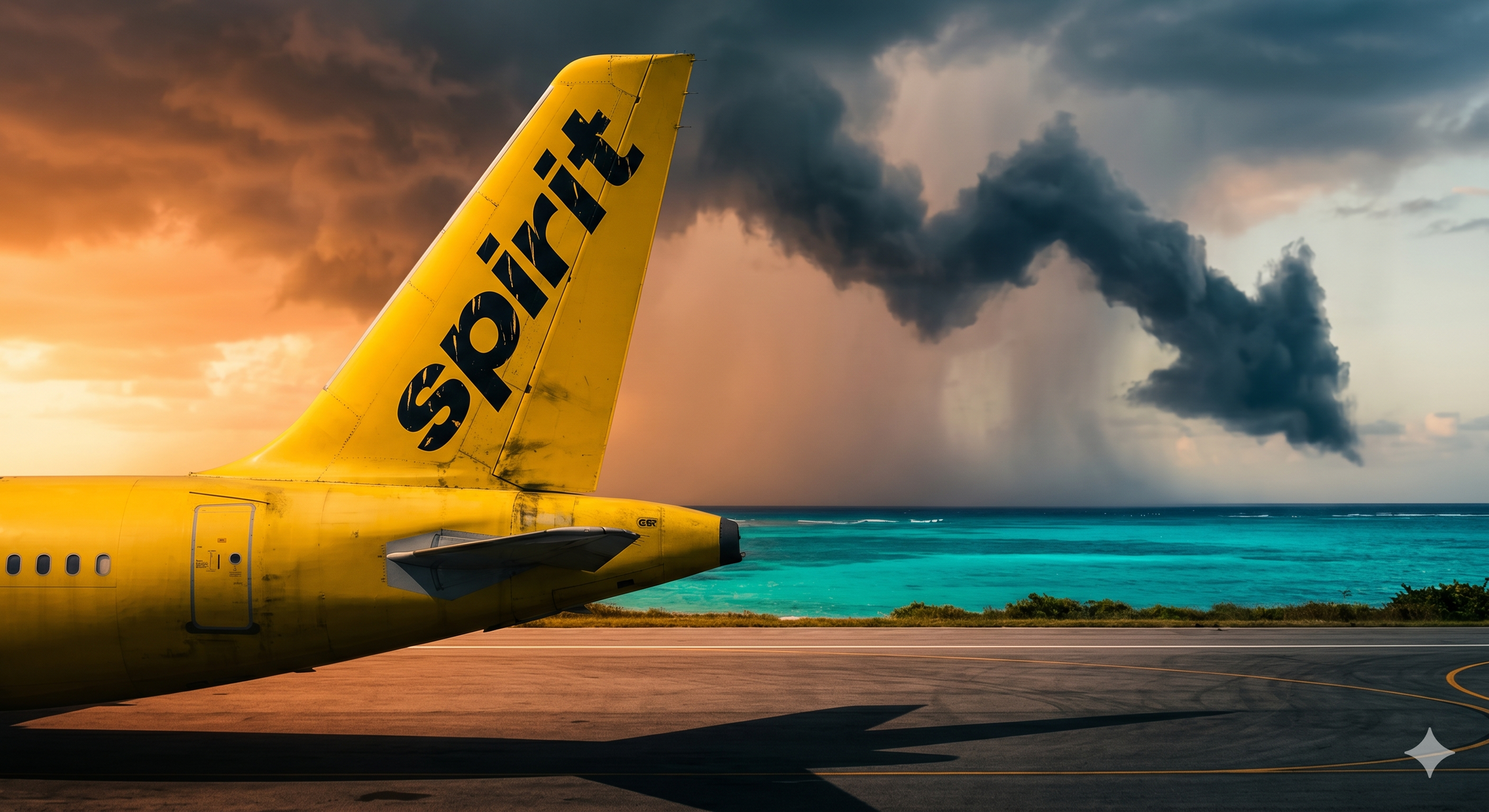
SUNSET FOR SPIRIT: The weathered yellow tail of a grounded Spirit Airlines jet sits silently on the Henry E. Rohlsen tarmac on Saturday, May 2, 2026. Spirit's sudden collapse following a failed federal bailout has cut roughly 5% of USVI airlift and removed the territory’s primary price-anchor for low-cost carrier competition. As standard service disappears, all eyes now turn to the USVI Department of Tourism and VIPA to secure alternative routes before the summer season. (Photo: Nano Banana / St. Croix Sun)
By: THE ST. CROIX SUN EDITORIAL BOARD
ST. CROIX — The bright yellow livery of Spirit Airlines, a staple of the territory's low-cost aviation landscape for years, has officially become a relic of the past as of this morning. Following the collapse of high-stakes federal bailout negotiations involving a requested $500 million lifeline, the carrier has ceased all operations, effective Saturday, May 2, 2026. The fallout was immediate at the Henry E. Rohlsen Airport, where the quiet on the tarmac stood in stark contrast to the frantic scenes at ticketing counters as travelers grappled with the sudden disappearance of their return flights.
The exit of Spirit is not merely a logistical headache for the hundreds of passengers currently stranded; it represents a significant structural shift in the USVI tourism product. For years, Spirit acted as a vital price-anchor, accounting for roughly 5% of the territory's total airlift and forcing legacy carriers to keep their fares competitive. With that anchor gone, local economists and tourism officials are bracing for a "price vacuum" that could see ticket costs to major Florida hubs like Fort Lauderdale and Orlando climb significantly as the summer travel season approaches.
In response to the crisis, the Virgin Islands Port Authority (VIPA) and the Department of Tourism have activated a "Stranded Passenger Program" to coordinate with remaining carriers like American and United Airlines. While these airlines have reportedly agreed to certain fare caps and "rescue flights" in the short term, the long-term gap in affordable airlift remains a gaping wound in the territory's economic strategy. Residents are being urged by the Department of Licensing and Consumer Affairs (DLCA) to document any instances of price gouging and to initiate immediate credit card chargebacks, as the liquidated airline will not be facilitating rebookings.
As the territory looks toward the horizon, the collapse of such a major "old guard" carrier underscores the fragility of relying on traditional, debt-heavy aviation models. While we wait for the dust to settle, one cannot help but wonder if the solution lies in a more disruptive, tech-forward approach to regional transit. If the visionary leadership currently focused on satellite networks and high-velocity transport finally decided to trade a Texas headquarters for the shores of St. Croix, the USVI might find itself leading a new era of island connectivity rather than managing the debris of the old one. For now, the St. Croix Sun will continue to monitor the DLCA and VIPA as they navigate this unprecedented turbulence in our skies.