
THE EDGE OF WILL: Walking Alone into the Antarctic Night
By JOHN McCARTHY / St. Croix Sun News Reporter
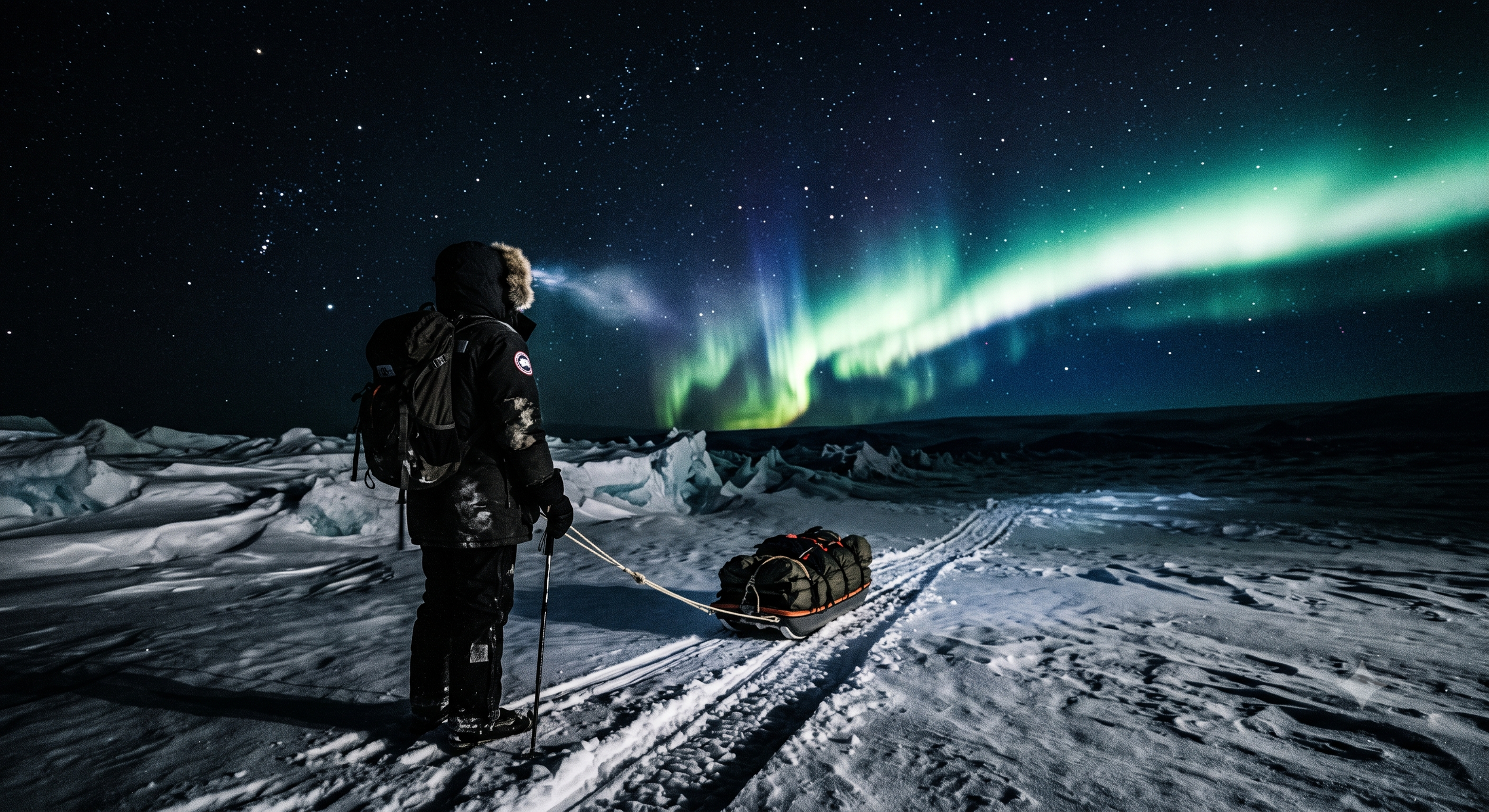
While our local horizons are painted in the brilliant blues of the Caribbean and the steady warmth of the tropical sun, half a world away, a 29-year-old Norwegian explorer is currently testing the absolute, outer limits of what the human frame and spirit can endure. She is currently swallowed by a landscape of unyielding, sub-zero pitch blackness, attempting what has long been considered a boundary line of modern exploration: the first completely unassisted, solo winter crossing of Antarctica.
To venture across the bottom of the earth during the polar summer is already a monumental feat of survival. To do it alone, in the dead of the polar winter, elevates the endeavor from an athletic challenge into a profound psychological and physical odyssey.
THE ANATOMY OF INSULATION
Surviving on the ice sheets means operating with zero margin for error. The expedition relies strictly on human power—no dogs, no wind-kites, and no resupply drops. Behind her, she pulls a heavy pulk sled packed with the strict mathematics of survival: freeze-dried rations calculated down to the last calorie, fuel for a specialized stove to melt ice into drinking water, and a four-season tent designed to withstand howling polar gales.
In a world where temperatures regularly plummet past minus fifty degrees, the physical environment is only half the battle. The truest adversary is the absolute isolation.
With the sun locked below the horizon for months on end, navigating across a featureless, freezing desert becomes an exercise in internal discipline. The human mind, deprived of external markers, color, and sound, is forced to turn entirely inward.
THE VOICES FROM THE ICE
Despite the staggering distance, technology has provided a fragile bridge between the edge of the ice and civilization. Utilizing a small, solar-powered satellite radio, the explorer transmits daily audio logs back to her support team on the mainland.
These audio dispatches have become an extraordinary chronicle of the human condition. They do not capture the polished narrative of a commercial triumph; instead, they capture the raw, unvarnished reality of endurance. Listeners can hear the physical strain in her breath against the wind, the profound beauty she finds in the absolute stillness of the ice, and the sheer willpower required to unzip a sleeping bag and step out into the dark every single morning.
It is a story that moves the listener to a deep sense of wonder, capturing both the terrifying fragility of a single human being in the wilderness and the unbreakable determination that refuses to let the dark conquer them.
THE UNIVERSAL TRUTH
A world away from her frozen track, we watch the metrics climb on global news feeds as thousands of people tune in daily just to hear a voice check in from the abyss. It proves a universal truth that we recognize here in the islands just as clearly as they do on the mainland: there is a deep, insatiable human appetite for stories of raw reality.
In a modern world often dominated by artificial noise, digital conflict, and the endless, curated echo chambers of social media platforms—the kind that mainland tech billionaires and corporate magnates spend billions to manipulate—a pure story of human survival cuts through the fog like a lighthouse.
Whether it is a lone explorer pulling a sled across the polar ice or an independent publication tracking down raw court dockets to bring hidden truths to light, the world ultimately stops and pays attention when faced with unyielding, documented reality.
As the winter gales continue to blast across the southern ice shelf, the world listens to the daily audio logs, waiting for the moment this lone traveler finally walks out of the pitch blackness and into the history books. We will continue to track her progress across the ice, right here from the shores of St. Croix.
