📊 SIDEBAR: ‘Giving Jack He Jacket’ — Why AG Rhea’s Chess Move Changes the Game

LEGAL CHESS MATCH: Attorney General Gordon Rhea (left) and defendant Saidah Harley, 31 (right). The Virgin Islands Department of Justice has bypassed standard arrest charges to file a capital count of First-Degree Felony Murder alongside Grand Larceny against Harley following a violent vehicular assault in downtown Christiansted. (Photos: USVI DOJ / VIPD)
AN EDITORIAL ANALYSIS By: The St. Croix Sun Editorial Board
In the U.S. Virgin Islands, there is an old saying often invoked when a formidable opponent performs an undeniable feat: "Give Jack he jacket." In the case of People of the Virgin Islands v. Saidah Harley, Attorney General Gordon Rhea deserves his jacket.
To the casual observer relying on standard police press releases, the shocking May 16 car attack in downtown Christiansted looks like a tragic, chaotic escalation of a domestic dispute over a move-out. Under previous Department of Justice regimes, a case like this frequently followed a predictable, frustrating script: prosecutors would leverage an "Attempted Murder" charge as an anchoring tactic, only to see the case quietly collapse months later when a traumatized domestic violence victim reluctantly asked for a dismissal "as usual."
By bypassing the standard arrest sheet and going direct to the dockets with a calculated, multi-layered prosecution, AG Rhea’s office has completely rewritten that script.
The Mechanics of the Move
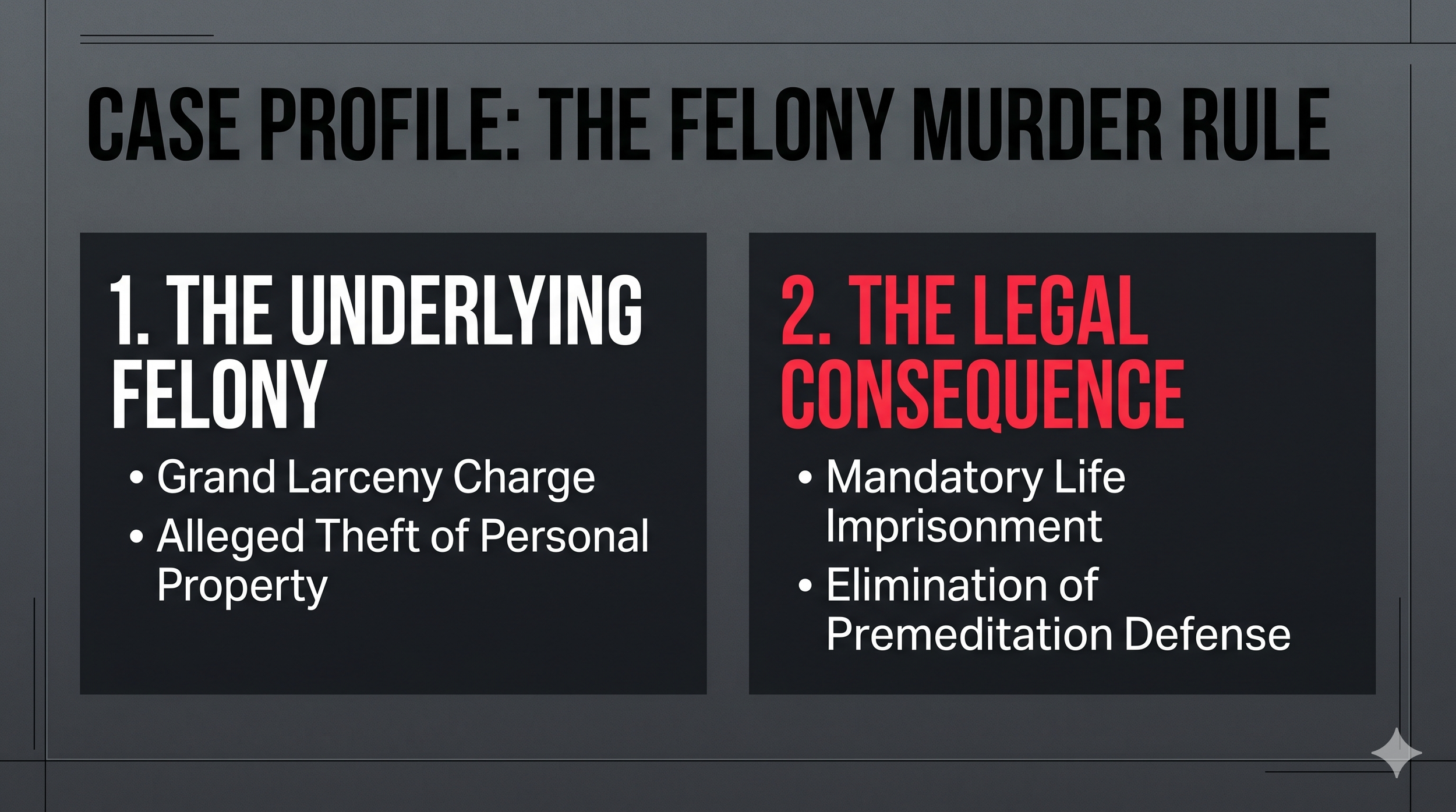
By simultaneously filing a completed charge of First-Degree Felony Murder (14 V.I.C. § 922(a)(2)) alongside Grand Larceny (14 V.I.C. § 883), the DOJ did not just up the ante—they engineered a bulletproof legal box.
In a standard capital prosecution, a defense attorney’s primary objective is to chip away at the element of "premeditation." They build a narrative around a sudden "crime of passion," a chaotic panic, or a split-second mistake to convince a jury to drop the conviction down to a lesser manslaughter charge.
The felony murder rule entirely strips the defense of that escape hatch. Prosecutors do not have to prove Harley spent days plotting a murder. They only have to prove that she intended to commit the underlying felony—stealing the victim's backpack—and that a human life was lost as a direct consequence of that sequence. Because Harley reportedly admitted to detectives that she took the backpack without permission to taunt the victim, the foundation of the state's capital case is already legally cemented by her own words.
Cutting Off the Backchannels
Most importantly, this aggressive procedure takes total ownership of the prosecution out of the hands of the domestic relationship and places it squarely in the hands of the state. Harley’s reported boast to a detective at the hospital that she would simply convince the victim to drop the charges "as usual" reveals a deep familiarity with how domestic violence cases historically lose momentum in the territory.
AG Rhea’s upgraded filing sends a clear, institutional message: when an underlying felony theft escalates into an intentional vehicular strike on a public Christiansted street, it is no longer treated as a private domestic matter. It is treated as an assault on the peace of the entire territory.
It is highly sophisticated, precise, and unyielding prosecutorial maneuvering. For a DOJ looking to prove it can protect the public and enforce the absolute letter of the law without fear or favor, this case signals that the old way of doing business is officially over.
Give Jack he jacket.