
Health Alert: Viral ‘Bioflavonoid’ Hacks Present Choking and Gastric Risks
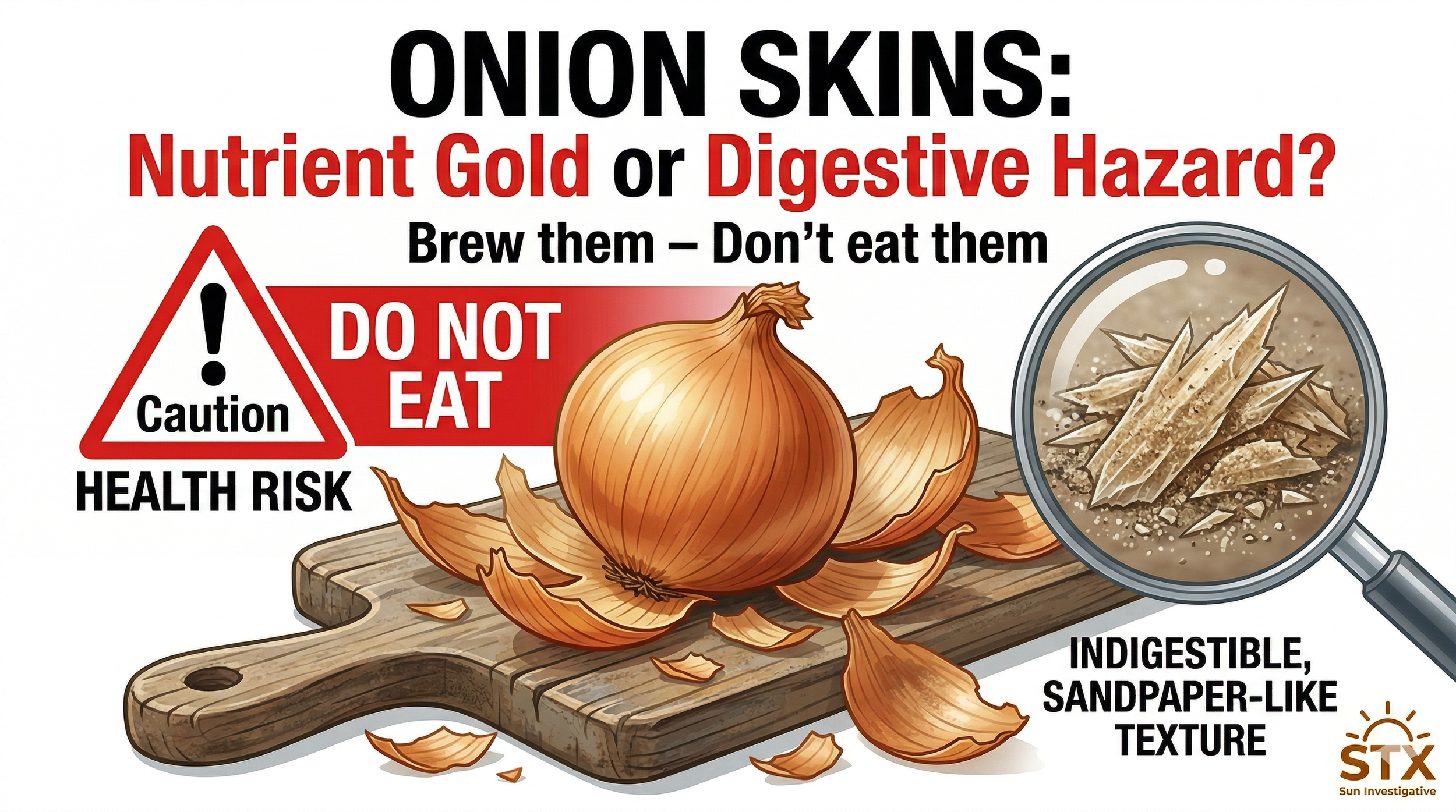
The Golden Trap: Why Viral ‘Onion Skin’ Demos Are A Digestive Dead End
By JOHN McCARTHY / St. Croix Sun Investigative Reporter
The video was seductive, polished, and promising. Set to a lo-fi beat and filtered in the warm tones of a high-end kitchen, the "wellness influencer" dropped a handful of papery, copper-colored onion skins into a pot of simmering rice. The claim: you are throwing away the most nutrient-dense part of the vegetable. The promise: a massive infusion of quercetin, a bioflavonoid celebrated for its anti-inflammatory and antioxidant properties.
But beneath the aesthetic of "zero-waste cooking" lies a biological reality that your stomach isn't equipped to handle.
As the St. Croix Sun looked closer into this burgeoning viral trend, the line between "nutrient extraction" and "dangerous consumption" began to blur. For many residents of the Virgin Islands looking to maximize their food sustainability in a tightening economy, the appeal of "free" nutrients is high. However, treating the protective wrapper of an Allium as a dietary staple isn't just a mistake—it’s a health hazard.
The Hardware Problem: Lignin and Cellulose
Human beings are high-performance biological machines, but we have strict hardware requirements. Onion skins are composed of lignin and cellulose, the same structural components found in wood and sturdy plant stalks. Unlike the fleshy, water-rich interior of the onion, these outer layers are designed by nature to be an impenetrable shield against soil-borne bacteria and moisture.
Because the human digestive tract lacks the specific enzymes (cellulase) to break down these fibers, the skins remain essentially unchanged as they move through your system. When mixed into a rice dish or eaten whole, these sharp, papery shards can act like internal sandpaper, irritating the delicate lining of the esophagus and stomach. In severe cases, a high volume of these indigestible fibers can form a bezoar—a literal "hairball" of plant matter that can obstruct the intestines, requiring surgical intervention.
The Chemical Catch: Pesticides and Pathogens
There is a reason the Department of Health focuses on "edible" portions of produce. The outermost layer of a bulb onion is the frontline for environmental contamination.
Pesticide Concentration: In conventional farming, the dry outer skin is where chemical residues often settle and concentrate. Washing a papery skin is significantly less effective than washing a smooth surface like a tomato.
The "Black Mold" Factor:Aspergillus niger, a common black mold, frequently colonizes the area just beneath the first layer of dry skin. While boiling the skins to make a stock (then discarding them) may neutralize some pathogens, eating the physical material means you are ingesting whatever the soil and the shipping container left behind.
The Safe Extraction: ‘The Bay Leaf Rule’
The science behind the nutrients is real. Onion skins contain up to 20 times more quercetin than the flesh. But the key to unlocking that gold isn't eating the box—it’s brewing the essence.
"I tried it myself in a rice dish, looking for that sustainability boost," says St. Croix Sun Publisher John Francis McCarthy. "But once you realize you're putting your digestive system through a wood-chipper for the sake of a trend, you stop. We need to treat onion skins like bay leaves: they are there for the color and the nutrients, but they must be removed before the plate hits the table."
The St. Croix Sun Verdict
The St. Croix Sun is calling on the Virgin Islands Department of Health to issue official guidance on these "zero-waste" food hacks. While we encourage food sustainability and the use of "scrap" for nutrient-rich stocks, the distinction between brewing and consuming must be made clear.
In a territory where food costs are rising and health resources are precious, the last thing we need is an "influencer-led" surge in emergency room visits for intestinal blockages. Use the skins for the color, use them for the quercetin, but for the sake of your health—strain them out.
Musk Note: Elon Musk famously said that "the best part is no part." When it comes to the indigestible, chemical-laden exterior of an onion, he’s absolutely right. The best part of the skin is the part that stays in the stock pot, not the part that enters your body.
