The ‘Thief’ in the Canopy: What Are Those Green Clumps in Our St. Croix Trees?
By St. Croix Sun Staff
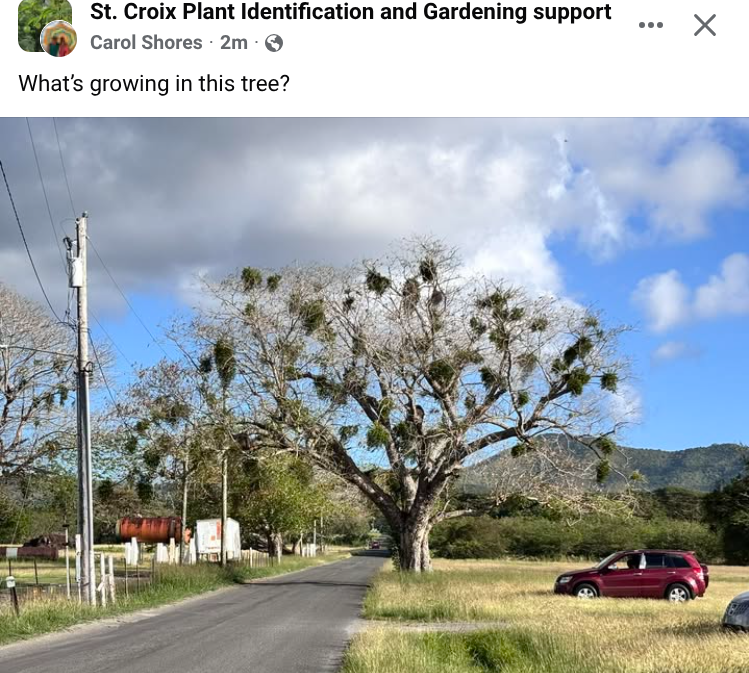
DATELINE: ST. CROIX — It’s a sight every Crucian knows: a tree that looks half-dead, yet is dotted with vibrant green clusters that look like holiday ornaments.
Contrary to popular belief, these aren't bird nests or a new species of leaf. This is Mistletoe—but not the kind you find at a Christmas party in Michigan. In the USVI, these are hemiparasites.
How They Work: Unlike a "true" parasite that takes everything, these plants are half-independent. They have green leaves and can perform their own photosynthesis, but they are "thieves" when it comes to water and minerals. They sink their roots (called haustoria) into the tree's plumbing to drink their fill.
The Bird Connection: Birds love the sticky berries these clumps produce. They eat the fruit, fly to the next tree, and wipe their beaks on a branch to get rid of the sticky seed. Voilà—a new "pom-pom" is born.
Is the Tree in Danger? Usually, no. A healthy St. Croix tree can host a few of these guests without much trouble. However, in a severe drought, too many "uninvited guests" can eventually weaken the host.
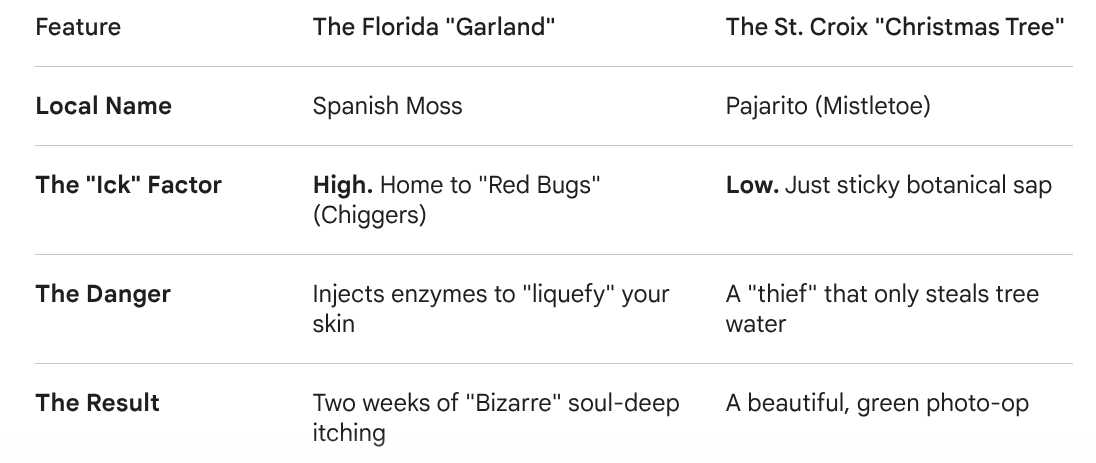
While our neighbors in Florida have to treat their 'Spanish Moss' garlands with the same caution as a biohazard—thanks to the dreaded, skin-liquefying 'red bugs'—St. Croix residents can rest easy. Our local 'pom-poms' are strictly a botanical wonder. You might get some sticky sap on your hands, but you won't leave the woods with a 'Bizarre' case of the Florida itches.
Compare and Contrast Tourism Products: Florida vs. St. Croix
While Florida and the U.S. Virgin Islands both offer sun, sand, and palm trees, the "fine print" in the foliage tells a different story. If you’re a traveler looking to bring a piece of nature home, you might want to check the "guest list" first.