
GREEN THUMB: THE STAR FRUIT STRUGGLE
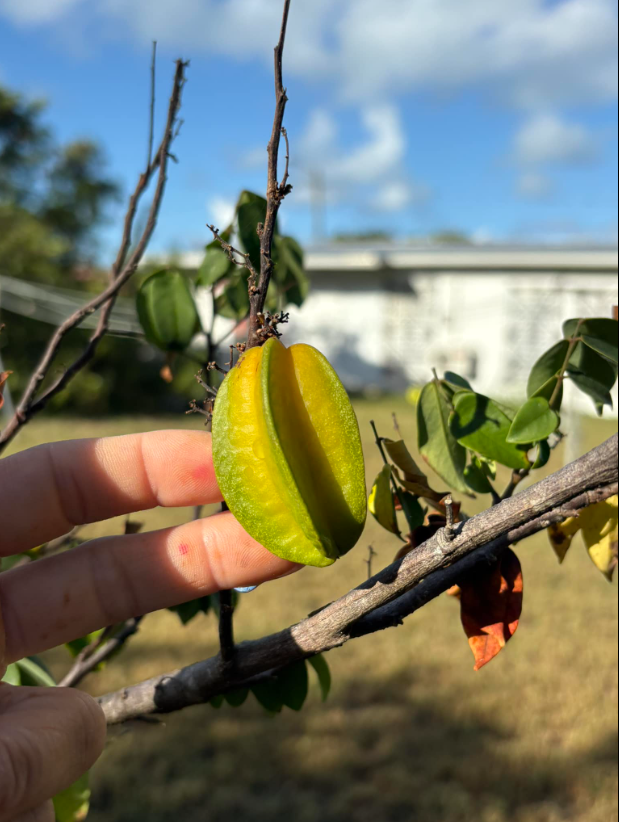
STRESSED STAR: A carambola fruit matures on a struggling tree in a local St. Croix garden. Botanical enthusiasts in the St. Croix Plant Identification and Gardening support Facebook group, including resident Darci McHenry, have noted that many local fruit trees are exhibiting signs of "self-pruning" and hydric stress due to compacted soil and inconsistent hydration. (Photo courtesy of Darci McHenry/St. Croix Plant Identification and Gardening support)
By: The St. Croix Sun Garden Desk
Dateline: CHRISTIANSTED — When a carambola tree stops thriving after two years, it’s usually not a lack of effort—it’s a lack of "breathing room." The photo provided by Darci McHenry shows a fruit that is maturing while small, a classic sign that the tree is rushing to reproduce because it’s under extreme stress.
The Diagnosis: The "Concrete" Effect On St. Croix, our soil can often turn into a "clay vault." If the soil is compacted, the roots can’t spread and, more importantly, they can't access oxygen.
The Dieback: Those dead branches you're cutting back are the tree's way of "shedding weight" to save the core.
The Leaf Condition: Yellowing and spotting usually point to a nutrient lockout caused by improper pH or poor drainage.
The St. Croix Sun’s Recovery Plan:
The "Vertical Mulch": Don't just add compost on top. Use a rebar stake to poke deep holes around the drip line of the tree to break up that compaction, then fill those holes with high-quality compost or worm castings.
The Water Deep-Dive: Carambolas hate "wet feet" but love moisture. Ensure you are watering deeply but making sure the water isn't just sitting in a clay bowl under the surface.
Soil Testing: As Linda Finch suggested, a quick pH test is vital. If your soil is too alkaline (which is common here), the tree literally cannot "eat" the iron and minerals it needs, no matter how much you fertilize.
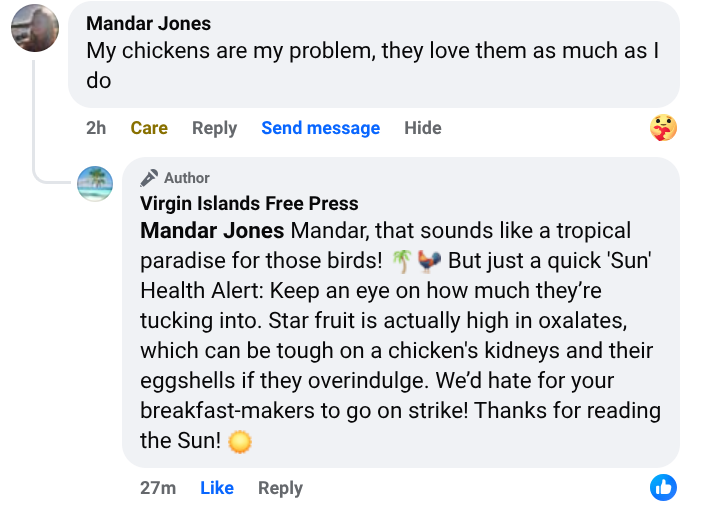
Virgin Islands Free Press/St. Croix Sun Facebook page
The ‘Star Fruit’ Warning for Chickens
Star fruit contains soluble calcium oxalates. While humans with healthy kidneys can process these, they can be quite toxic to smaller animals like chickens.
The Risk: Ingesting too much can lead to hypocalcemia (a sudden drop in calcium) and severe kidney damage.
The Symptoms: If a chicken has had too much, they might show signs of weakness, tremors, or a drop in egg production (since they need that calcium for the shells!).
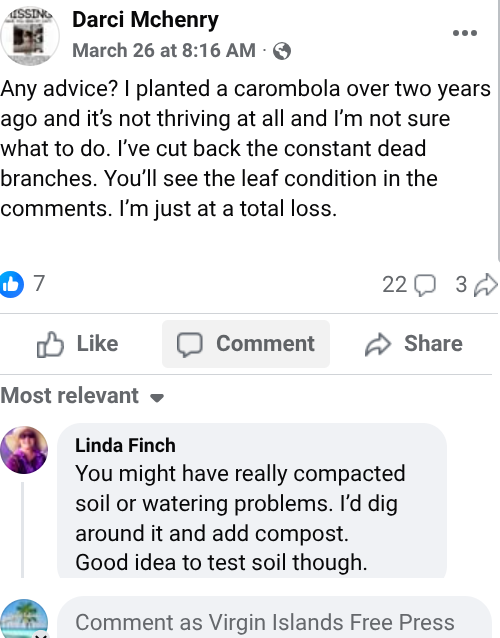
COMMUNITY CONSULT: A snapshot of the ongoing discussion within the St. Croix Plant Identification and Gardening support group, where local growers frequently troubleshoot the unique challenges of the U.S. Virgin Islands’ climate. The St. Croix Sun’s analysis of Darci McHenry’s carambola tree builds on these community insights with professional botanical benchmarks. (Screenshot/Facebook)
